Indian Pitta

It inhabits scrub jungle, deciduous and dense evergreen forest.

Nilgiri Flycatcher

An endemic resident in the Western Ghats of southern India.

Brown-winged Kingfisher

These kingfisher species excavate their nests in a river mud bank.

Tiger

Tales from the Land of Mowgli

Merlin

Feeds mostly on small birds, capturing them in mid-air in rapid pursuit.

Malabar Trogon

A resident of dense tropical forests.

Malabar Pied Hornbill

This species is omnivorous, taking fruit, fish and small mammals.

Crimson-backed Sunbird

Diet of sunbirds is based mostly on nectar

Golden-breasted Fulvetta

They prefer dense undergrowth, usually dominated by bamboo forest.

Translate

Showing posts with label Birding in Dehing Patkai. Show all posts

Wednesday, December 22, 2021

Birding in Mishmi Hills & Maguri Beel

Dibang Valley (lower) a region, tucked away in the eastern Great Himalaya Range along the northeastern state of Arunachal Pradesh India was our destination for this winter (Nov end) birding session this year.

Dense forests - Dibang Valley (lower) - Yash Kothiala

During the summer of 2017 (April) had visited the Mishmi hills, that are the highest range of Purvanchal hills situated in the Shivallils (outer Himalayas) they are also known by different names in different areas such as Abor, Dafla, Miri and Mishmi Hills in Arunachal Pradesh.


After a long flight from Mumbai to Dibrugharh (via Koltata) we drove straight to the newly built Frogmouth Camp & Resort, 14kms after the town of Roing. With all modern amenities, the entire place was to our disposal that evening. We recall visiting the exact spot to see the Hodgon’s Frogmouth during our previous trip.
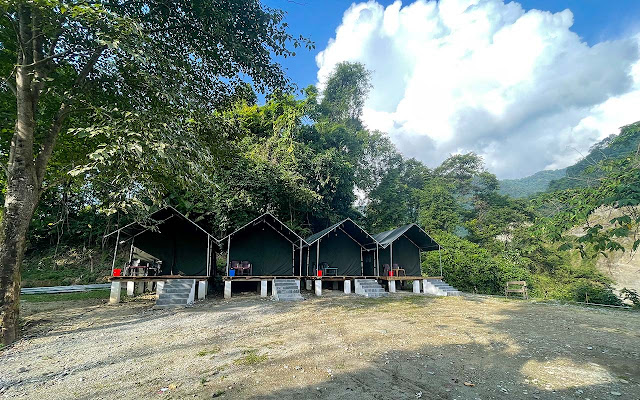
Frogmouth Camp & Resort - Yash Kothiala

Over dinner, Ravi Mekola our naturalist for the entire trip shared the itinerary that he had planned for us around the region that has Subtropical evergreen forests of oak, maple, juniper, and pine covering the characterised by steeply sloping mountains. He sounded excited as he mentioned that there were regular sightings of the illusive Sclater’s Monal in the valley at this time of the year.


Only we need to reach the place beyond Mayudia pass (around 44 kms) before day break, as it seems the bird begins its journey into the upper or lower regions of the valley and usually crosses the spot, which was more open and one can get a good glimpse of the bird. So we had an early dinner and slept by eight pm only to wake up at 2.30am to begin the onward journey.


Though it was the wee hours of the morning, seemed like the night was still young, the breeze was cool had surely gone even more cooler as we reached the spot, luckily we had anticipated and worn a few layers (including thermals). We mounted our equipment on the tripod, walked a while and the wait began. Slowly dawn broke, and with each passing moment our anticipation to see the bird soared. 


Surely, the weather was more favourable to the region than to us, as it had started to drizzle and soon intensified. A few more birders joined in and waited along with us. As the day light came in, it bought some birds like the Black-faced Laughingthrush, Ludlow's Fulvetta right next to where we were waiting.


Almost an hour or so had passed and there was no sign of the bird today, being the first day none of us felt low and soon we drove out towards the 65kms milestone. The place has a small restaurant, which was very neat, cozy and had some amazing options where we could have breakfast, cooked on a traditional fireplace.


Just around the place there were only three to four cottages maybe home to the local inhabitants, while the others were still in the restaurant, walked around a bit and saw little colourful flowers that had bloomed along the road. Feels nice when one is at an altitude higher than the clouds, that are sailing slowly, creating a mist around you. 


Later we drove back towards Coffee house, a place where tourists and mostly birders camp up. This time we were put up in a very typical wooden inspection bungalow, the Forest IB,  a few steps above Coffee house. My past experience in April itself had given me chills during the night. We were surely expecting the November chills to be more, the weather gradually changes as soon as the sun sets. Temperatures stay as low as 12 C° during the day. In the evenings and at night though it cools down even more. One morning it was surely  measure around 0 C° in our room. We had taken cozy sleeping bags this time, that would keep us warm even in -4 C°


There is no electricity supply in only of these two places and we had to depend and wait till its 5.30PM as the genset would come on until 8PM, enough time to charge the camera batteries and phones.


The next day seemed so much better after a good sleep, though it was a foggy day, could still see so much of greens and so less of concrete. A cascading range of hills spread far and wide, surely a perfect habitat for forest birds. Manipur fulvetta’s (Steak-throated Fulvetta) were chirping all over the place. 


We had barely started our next session of birding and saw a bird in the distant perched on a high branch,  it was still drizzling, Ravi pulled out his binocular and said, take a picture quick, we were seeing a Vivid Niltava, taking a nice overview of the area, what an un expected lifer. 
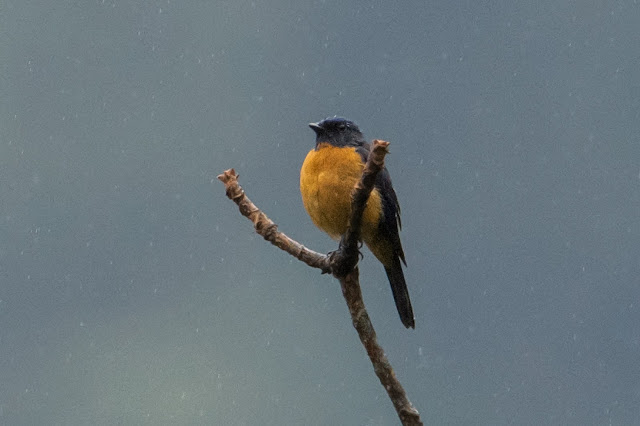
Vivid niltava (Niltava vivida) - Aseem Kothiala

The Mishmi Hills lie within the drainage basin of the Brahmaputra and its tributaries. The hills rise from the flood plains of Brahmaputra tributaries at just 400 m above sea level to reach heights close to the Indian-Chinese border above 5000m. The very reason the temperature changes drastically once one drives up the twining roads from Roing to Mayudia Pass (2655m). 


On the lower altitudes we could see sub-tropical evergreen forests, harbouring wild bananas and tree ferns. As we climbed up found Magnolias, Rhododendron, Bamboo and Hemlock Fir the most conspicuous trees at Mayodia Pass. Many birds like the Spotted Forktail, Grey-headed Canary Flycatcher, Broad-billed Warbler apart from Grey-sided Laughingthrushes were seen.
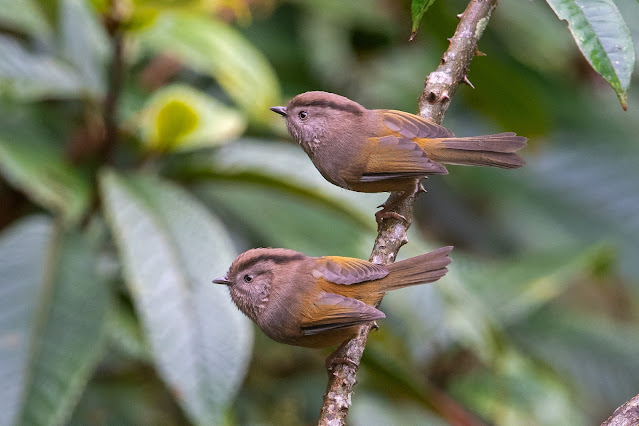
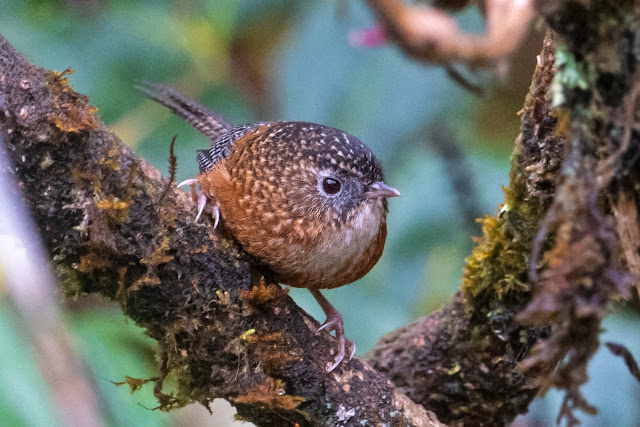
Manipur Fulvetta (Fulvetta manipurensis) - Yash Kothiala
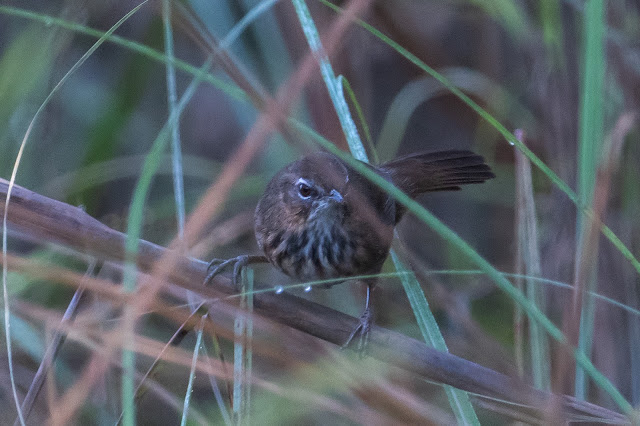
Bar-winged Wren-Babbler (Spelaeornis troglodytoides) - Yash Kothiala 
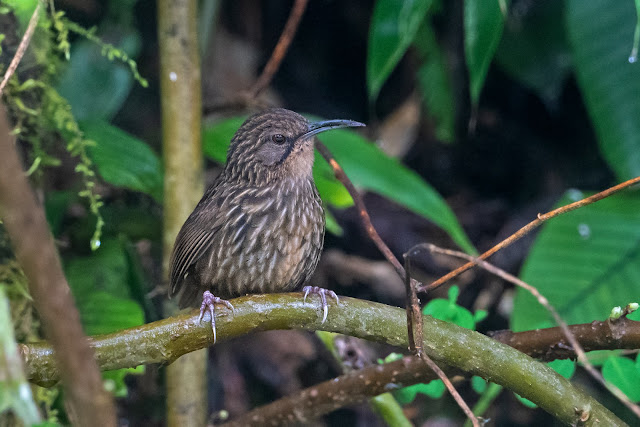
Long-billed Wren-Babbler (Napothera malacoptila) - Yash Kothiala

The Mishmi Hills surely do harbour many mammal species. But because of the inaccessibility of the terrain and the dense vegetation we could only get a glimpse of the Himalayan Serow, which was purely accidental, while we were driving really slow. It was twilight after dusk and the previous night we had got only a fleeting glimpse of the Himalayan wood owl.


Birding sessions everyday started at 4.30am and with a single bird in mind, yes the Sclater’s Monal. After waiting until 6am or so, we would go birding on the lower region until Hunli on one side and Tiwarigaon on the other. 


Birding continued sometime by walking a bit, driving a bit and just waiting in the vehicle when it poured, after each drizzle we felt, the air got even more cleaner. It felt so nice to breathe fresh mountain air and enjoy the little droplets fall over us. At some instances, surely felt the difference between April month and now, the activity was much lower, though we had seen the endemic Mishmi wren-babbler, Long-billed Wren-Babbler. Some birds only called, came and gave us a very brief visit and disappeared into the undergrowth without posing, specially the Gould's Shortwing!


On one of the instances heard calls of the ward’s trogon, we moved closer to the call and could see there were about three females who were in playful hunting mood, one of them obliged by posing on the mossy branch amongst the canopy.
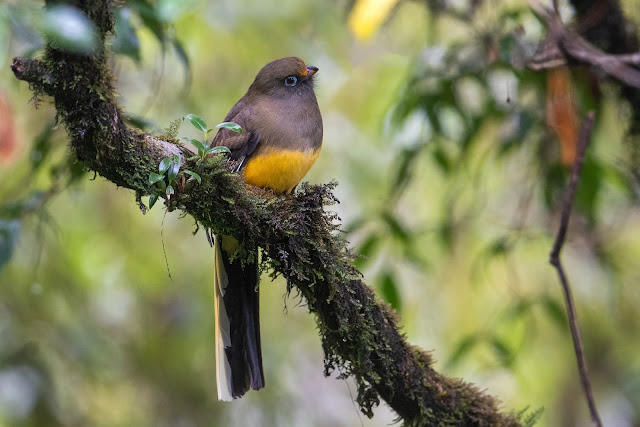
Ward's trogon (Harpactes wardi) - Yash Kothiala

No sooner, we moved a little ahead came across a hunting party of White-tailed Nuthatches, Green-tailed Sunbirds and some Yuhinas, they do create a bit of confusion, whom to admire and whom to ignore!


As the forests is dense here, there was no trail where one could walk on. Though its suggested that in the summer the trail can lead one to some illusive birds who do not come in the open, unlike this Crimson browed-finch. 
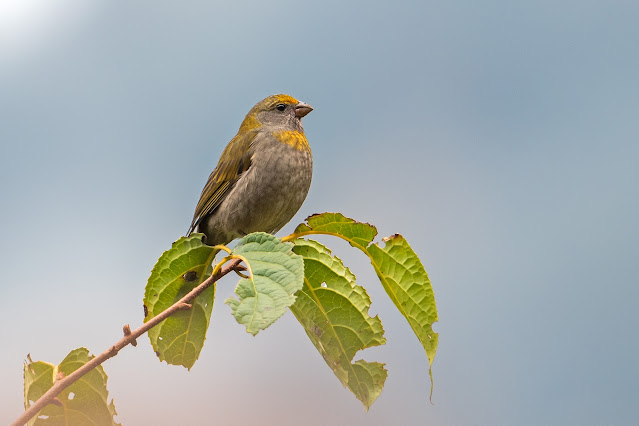
 Crimson-browed Finch (Pinicola subhimachala) - Aseem Kothiala

Once in a while we would hear the flock of Blue-winged laughingthrushe’s move up and down the valley, some being bolder than the other at times. Time flies it truly does, we had already spent 4 nights here and did get to see some lifers, on the contrary, Yash was having a great time, as it was his first ever trip to Mishmi, he was counting not only the lifers but also his blessings and the enjoying the company of Satish T, Dr Ian and Marvelyn Diaz our fellow birders in this trip.


Marron-backed accentors were seen in flocks of 6-7 and we had to keep our distance to see them, surely a shy kind here. A pair of Slender-billed Scimitar Babblers were seen busy feeding in a typical habitat of a open shrub. 
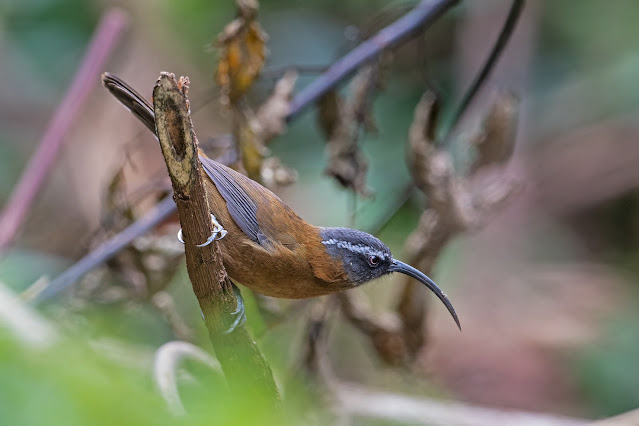
Slender-billed Scimitar Babbler (Pomatorhinus superciliaris) - Aseem Kothiala
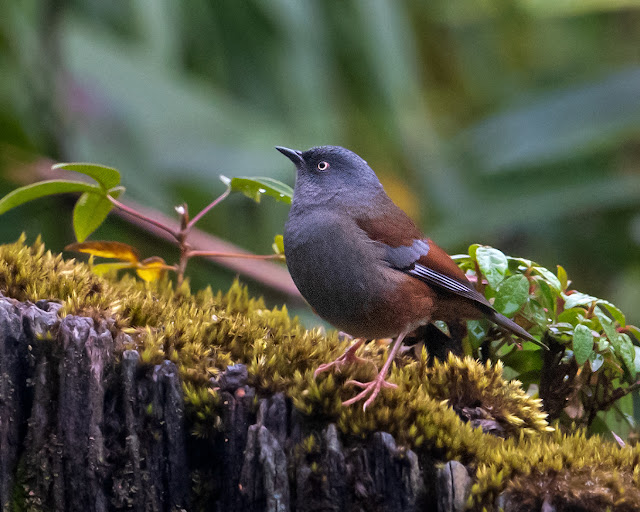
Maroon-backed Accentor (Prunella immaculata) - Yash Kothiala

Today evening was the last one we would be spending here and thought of driving a little late from Tiwarigaon towards Coffee house (near Mayudia pass) primary to see if we can get the glimpse of the Himalayan Wood-Owl. 


Trotro and Mara (both were an integral part of Ravi's team) set out in action quickly and soon gathered some fallen twigs, branches and dried leaves to create a bonfire. Ravi was all prepared with his thermos of nice black tea, which we enjoyed as sighted some amazing birds like the Beautiful Sibia and other commoners of the region. As the light disappeared we started our journey towards the forest IB and with no luck that day, reached our camp after a couple of hours.


The following morning, the 26th of November was our last morning and a last chance to try for the Sclater’s Monal and like everyday, we went, waited and left. Bidding goodbye to the region for now, but knew for sure we will have to return again someday to see this illusive and secretive bird, who maybe have changed its tracks and its to this instinct that the bird is still surviving in the region, roaming wild and free. Surely reminding us of the teaching of our spiritual master, "we can desire and put in our best efforts, its upto Mother Nature to oblige in fulfilling it." 


The nearest airport to reach the Mishmi Hills is from Dibrugarh (eastern Assam). So obviously our return leg was planned out from there, with two days of bird watching in the Grasslands of Maguri (near Tinsukia) and two days in dense forest of Dehing Petkai (near Digboi)


After the descend from Mishmi Hills, soon the extra layers of clothing were the first that we shed. The weather was awesome and the roads were nearly empty as we went speeding over the Dhola-Sadia bridge – India’s biggest – that was inaugurated sometime in 2017.  Reminded me how much time it had taken last time when one had to drive over rubbles and sand to get into and out of Arunachal Pradesh.


Ravi surprisingly took a detour to a small grassland to show Yash another lifer, the Black-breasted Parrotbill before we headed  to a location, much before Tinsukia, where the sighting of the Eastern grass-owl (also knows as the Australasian Grass-Owl) was happening, a birder had come across this sightings in late October this year, of this pair that were nesting. Again, there was a particular time, we may probably see it, this time just after dusk, when the sun sets.


On reaching the village we started to trek towards and into the grasslands,  We waded through thigh deep water and walked almost two kms to reach a spot, and waited a distance away from the site, where they are seen hovering and bringing meals for the young. The villagers who saw us carry our equipment were equally or rather even more excited than us and a few very keenly joined us in the wait.


Soon, it was sundown time, a few cormorants and Ruddy Shelducks were seen flying over us. A stray flight by the bat ensured we could try out focusing and panning skills, as if we wanted to get an image, which had to taken in flight only. There was no way we could or wanted to venture near the nest. In a gap of about 45 mins the owls came twice with the meal. In one instance, surely the bird had noticed us and was circling over us and calling out. 
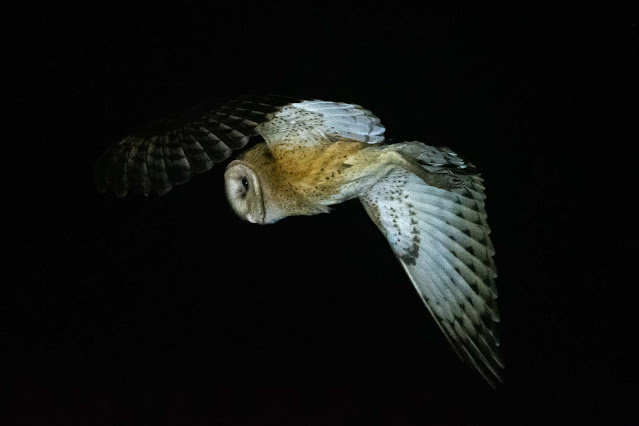

We felt, it was an indication that it’s time to leave them to carry on with their parental duties.
Australasian Grass-Owl (Tyto longimembris) - Aseem Kothiala

Using our torches we got back to the other side of the bank again walking through the tall grass and wading through the river, the water seemed much warmer. The soft sand felt like a rich Persian carpet!


After a nice cup of local black Assamese tea, we drove out towards Digboi. A town famous not only for Oil but also for bird watcher. But this time we were going to spend two days in Dehing Petkai National Park, only to look for another illusive bird, the Grey peacock Pheasant. During this time of the year the vegetation and under growth is less, making it a little see to sight this ground bird. Second and most important for us, the leeches just don’t exist at this time of the year, so we could walk safely into the dense forests. Only we need to be cautious of the elephants.


After reaching the gates of the National park and completing the entry formalities, started to walk deeper into the forest on a track that was made. We sat along a slope that had a lot of shrubs around us. All we could see now was area that looked like an oval arena covered with plantations of creepers and thick barks of the tall trees, that kept shedding leaves and droplet of water (dew). We were as quiet as we could be, each one sitting not far from each other but confined to a very small area. Any sound even of a twig snapping and the bird would disappear, said Ravi. 


The game of waiting began, simply love this part, as it gives you time to listen to your thoughts, desires for that moment. Suddenly we could hear its call, it was calling from very near, maybe from the right side, where we were sitting. Like a beautiful model walking down the ramp, saw it move through the bushes, it was feeding and moving swiftly, whenever we clicked the sound of shutter did alert it, it would look around and move faster. There was this instance, it walked so close to the place where we were hiding, the beauty was mesmerising. Trust me, you cannot hear when its walking, they are so silent, it had almost finished surveying the area and slowly climbed up the small hill in front of us and disappeared. We all looked at each other in surprise and had goosebumps after seeing this amazing bird so close and for so long!
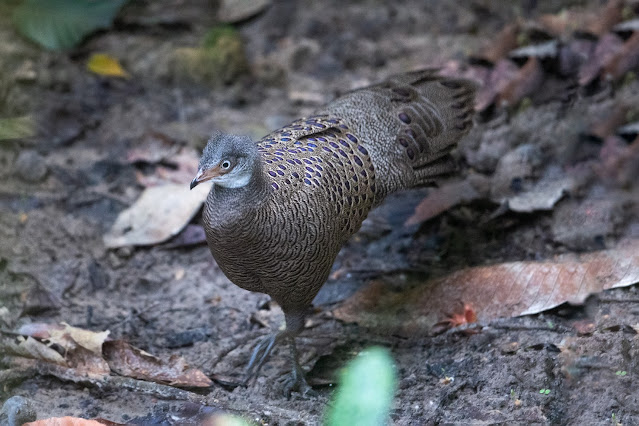
Grey Peacock-Pheasant (Polyplectron bicalcaratum) - Aseem Kothiala

Quietly we got up and one by one started to walk back, without uttering a word, just to ensure the silence of the forest is maintained and the bird is not disturbed. Personally, had seen the bird earlier on two different instances and the bird had just rushed into the forest, glad this time, it wasn’t alarmed by our presence. 


The region has many butterflies which would keep Dr Ian, Satish T and Marvelyn busy for sure, as they adore them. We had walked a lot today seeing many birds like the Pale-blue Flycatcher, Black-breasted and White-throated bulbul's and were even more happy when Ravi told us that we had arranged for home cooked meals in an Assamese home. The place reminded me of my native place (in Himachal Pradesh) , it was a home made of bamboo and mud, the veranda was clean and surely freshly coated with mud. Quickly, took off my shoes, as soon as the feet touched the floor, felt totally energersied. After a wholesome meal, even took a nap on the floor. 


When we woke up, we were offered white tea, made out of freshly plucked tender tea leaves from the neighbouring tea garden. By 2.30 PM we set out again into the forests for some more birding, here in the plains, the afternoon can get really warm. We sighted birds like the Silver-breasted Broadbill, Scarlet Minivet's ,and few other commoners. But even here the sun sets by 4.30PM giving you enough time to get back to the camp and rest, until one retires for the day with a good night sleep.
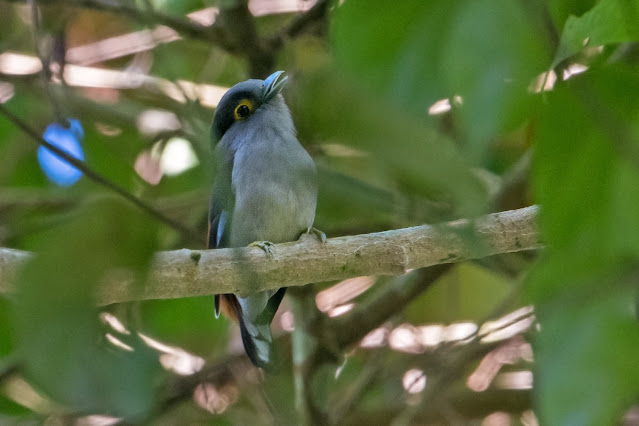
Silver-breasted Broadbill (Serilophus lunatus) - Yash Kothiala

The next evening, after birding in the forest, we drove towards our last destination for this trip, Maguri beel. Ravi put us up in an awesome camp called Maguri Eco Camp, which was just adjacent to the water body, commoners like the Pheasant tailed-jacana, Coots, Ruddy Shelducks along with Citrine and White Wagtails were our neighbours.


Imagine being able to wake up to bird calls, when you open the door, all you are see is vast open waters, mist moving over the water, which is broken by the wings of the birds that flutter to land.


Today we planned to do some grassland birding, birds here are also known to be skulkers and one needs a lot of patience and a lot of luck to see them. We had travelled here earlier, but the region was inaccessible due to the water levels being very high. Though this time, it was not much, we still had to hire a small boat to get to the other side, where the grass was really high and we walked on the perrifery. 


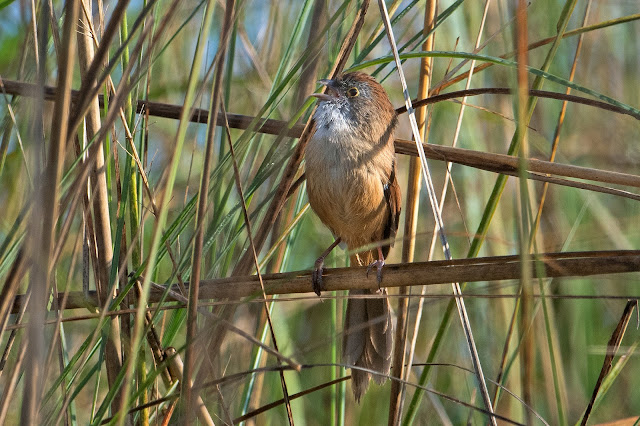
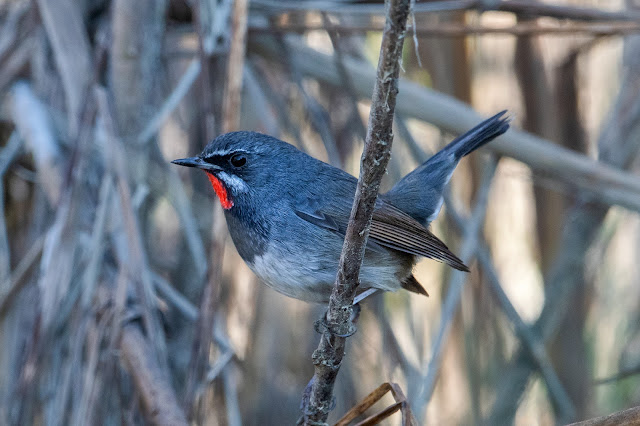
We were lucky to see the Swamp Prinia (Swamp Grass-Babbler) ,Marsh Babbler, Chinese Rubythroat to name a few as we walked around this small but rich (in terms of bird population) grasslands. With the disappearing grasslands, surely these birds are declining and some birds are already listed under either Vulnerable or near-threatened in the IUCN Red list. 
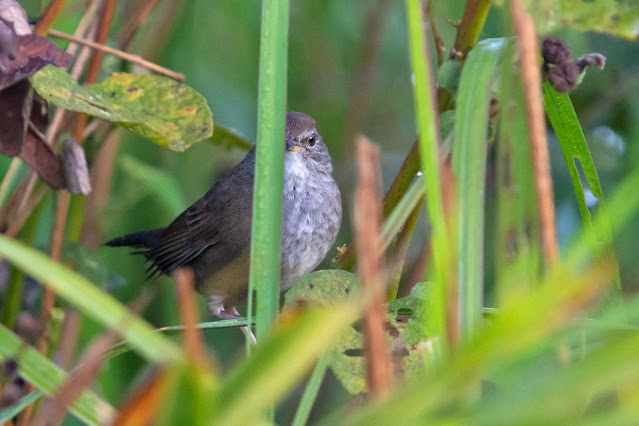
Spotted Bush Warbler (Locustella thoracica) - Yash Kothiala
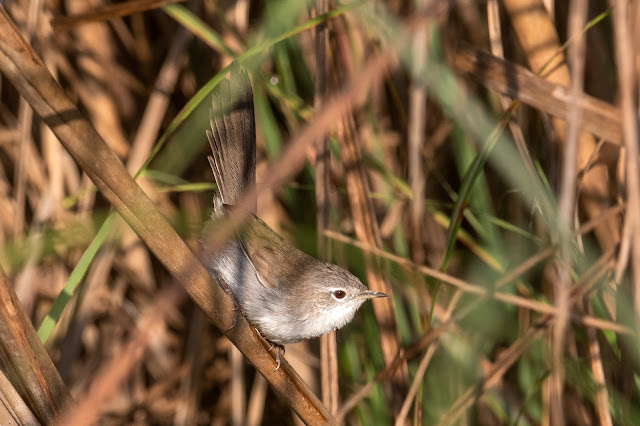
Swamp Grass Babbler  (Laticilla cinerascens) - Aseem Kothiala
Jerdon's Babbler (Chrysomma altirostre) - Yash Kothiala
Chinese Rubythroat (Calliope tschebaiewi) - Aseem Kothiala
Marsh Babbler (Pellorneum palustre) - Aseem Kothiala

No trip to Maguri is complete unless one takes the canoe ride, on the fresh waters. Its too early time of the year and the migratory species are yet to reach this amazing wetland. Though we could see the Pallas’s Grasshopper Warbler apart from Bar-headed Geese and commoners like Ruddy Shelduck's and Wagtail's. 


Occasionally we saw the Pied Kingfisher hover, take a dip (to catch prey), mostly aborting the dive mid-way and again hovering almost at the same altitude but a different location. Little cormorants wait patiently on the bamboo that were inserted into the water bodies by the local fishermen, to mark their territory. 


Lotus and other water plants can be seen floating here in very large number, many waders were seen. On that particular day we saw many swallows and small pratincoles take to the sky as we approached closer. 
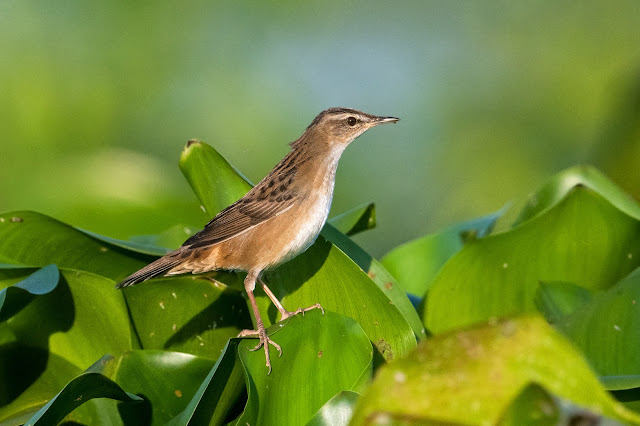
Pallas's Grasshopper Warbler (Helopsaltes certhiola) - Aseem Kothiala

Today was the day we spent just around the village of Maguri Beel, Swamp francolin's can we seen in large numbers along with Striated and Chestnut-capped babbler's. Along the small patches of water would see the birds busy foraging. It was as usual foggy like any other morning, the villagers had started to leave their homes, though it hardly affected the bird activity here, they surely were living in harmony. 


Thanking my fellow birders Satish Thayapurath, Dr Ian D'souza, Marvelyn Diaz and Yash Kothiala. Special thanks to Trotro, Mara and Ravi Mekola for making our trip totally memorable.  


Finally we packed our backpack's and equipment and headed to the airport to see more of concrete and less of green cover!


We saw close to 157 species in this trip, of which 16 were lifers for me, checklists updated on : https://ebird.org/profile/NTg5NTQ4/IN


Happy Birding and a Happy New year (2022)


You can connect with me 
TwitterFacebookLinkedInInstagramEmail


Wednesday, May 1, 2019

Birding in the land of the dawn-lit mountains

Land of the dawn-lit mountains has been phrased and refers to the easternmost place in India, Dong in Arunachal Pradesh, as it receives the first rays of the sun. It was supposedly discovered in the year 1999, later confirmed by Survey of India. Since, then it has prompted many visitors to visit this remote place, which is now known as the sunrise village.

At 1240 metres, Dong is located at the confluence of the turquoise coloured rivers, Lohit (a tributary of the mighty Brahmaputra) and Sati, that flow in all its glory, to the misty blue mountains of Walong in the Eastern Himalayas. Strategically placed at the tri-junction of India, China and Myanmar. 

Walong (1094 meters) is a small army cantonment and the easternmost town, in Anjaw district of Arunachal. From here we continued our quest to look for birds, drove towards helmet top, Namti Plains and the farthest tiny hamlet of Dong which was unknown to most of the world, Kibithu (Kibithoo), near China border. 

Derbyan Parakeets had not arrived, however we could sight the other birds of the region. The Godlewski's bunting, Goldcrests were seen in very large numbers, apart from the Black-headed Greenfinches who preferred to perch on wires and flew away at slight movements. 
Godlewski's bunting (Emberiza godlewskii)
Spot-breasted Parrotbills were heard almost at every location we stopped. They would call out and keep moving up the thin bamboo plants and fly to the next, usually in a group of 4-5
Spot-breasted parrotbill (Paradoxornis guttaticollis)
The Yunnan nuthatch was sighted along with the flock of Goldcrests but preferred to stay high among the tall pine trees. The winter winds would make the clouds rise above and felt like mist rising through the pine trees and the whistling sounds was a treat to the ears. 
Goldcrest (Regulus regulus)
A pair of Spotted nutcrackers were seen too foraging into the bark of the pine trees. Watching them, with the valley into the background was a delight. They had a large region to them and very little competitors.
Spotted nutcracker (Nucifraga caryocatactes)
Most of the time weather was gloomy and it would snow in the night, the transformations would male the terrain wildly enchanting and totally picturesque.
Walong
The Himalayan range looked very tempting and there were times when we would look far into the mountains and forgot we were birding!. 

Walong
The very reason, earlier had seen the Yunnan nuthatch, among the flock of Goldcrest's and had missed taking its image, as the landscapes kept us mesmerised. 
Yunnan nuthatch (Sitta yunnanensis)
As we drove along towards Kibithoo, could get network on the cellphone, from across the Chinese border. Otherwise most of the networks don't work in the region, which surely is a blessing. The weather gets cooler as one goes higher in the region. The roads are maintained by BRO and are in decent condition.

We stopped, as we sighted a Rufous-breasted Accentor, perched on a far away fallen log. However luck was on our side and we sighted the White-throated Redstart (male and female) and Chestnut-eared Bunting, foraging under a large canopy.
Chestnut-eared bunting (Emberiza fucata)
White-throated Redstart (Phoenicurus schisticeps)
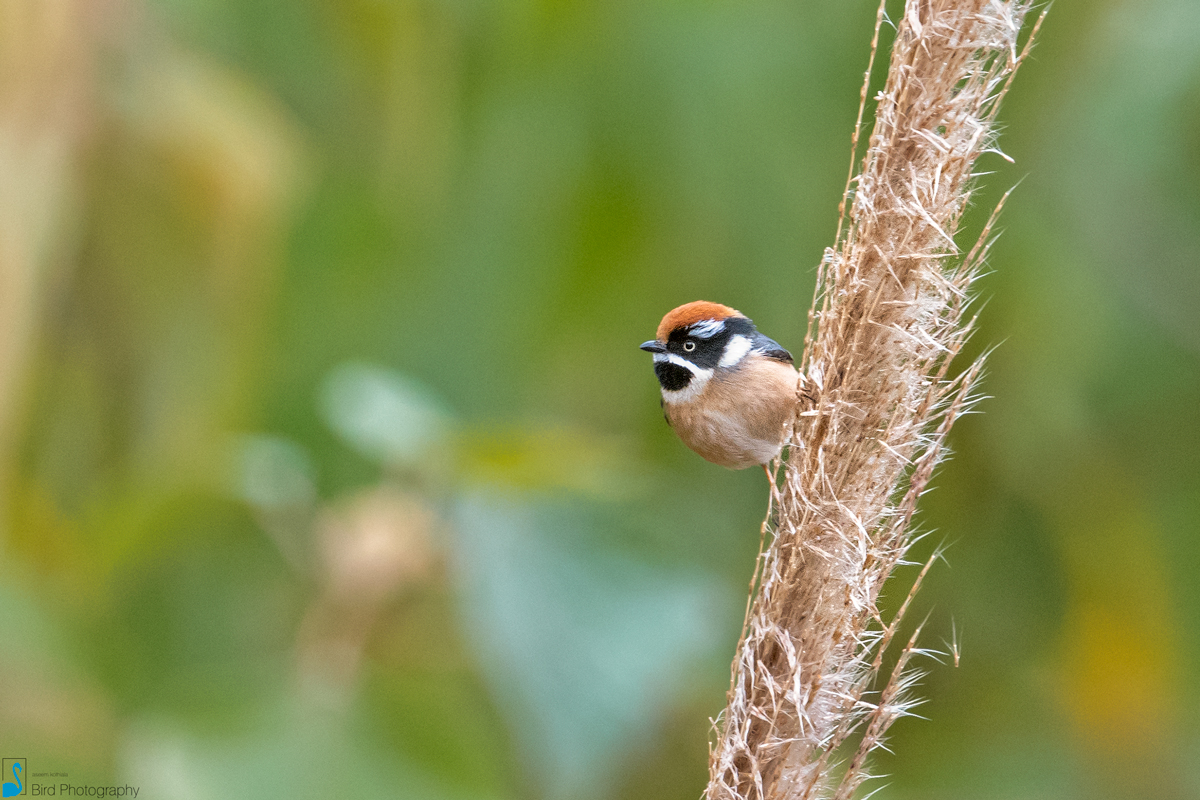
We did find the forest towards Helmet Top very promising for pheasants and a couple of hunters with guns riding into the dense forests endorsed our doubt. We had seen most to the target species of the region except the Black-browed Tit, though Ravi could hear them faintly and seemed very far. 

Himalayan Buzzard was seen hovering amongst the pine forest, occasionally it was being chased away by a pair of crows. The birding here like any other north-east destination was along the road.
Himalayan buzzard (Buteo refectus)
The other commonly seen species here were the Black-throated Tit, Green-tailed Sunbird and Flowerpeckers apart from the Rufous-gorgeted flycatcher.
Black-throated tit (Aegithalos concinnus)
How to reach:
To reach this place, we had flown from Mumbai to Dibrugarh on 10th Feb 2019 and prior to reaching Walong on 16th Feb 2019, spent three days in Maguri Beel (118 metres), which is a large wetland located 3.8 Km away from Guijan Ghat, gateway of the Dibru-Saikhowa National Park and a day each in Roing and Tezu.

Roing was a region, that we had missed due to heavy rains in 2017 so made a quick visit in the evening, here we sighted the Jerdon's Babbler. The grasslands had recently experienced forest fire and the reeds were just getting back to their normal height.
Jerdon's babbler (Chrysomma altirostre)
Roing is where we had met our guide for the region, Ravi Mekola and began our journey to the eastern most region, as the roads were just being broadened choose to drive upto Udayak pass and return to stay in Tezu for a day. We could have driven further, however the options were limited and bookings were not available.
The Route - Source Google Maps
Udayak pass (1650m) was were we saw a flock of Chevron breasted Babblers, there was about six of them. Rusty-fronted Barwings came in very close on a tree and the flock slowly moved upwards, while we kept waiting for the skulker to pose, they did respond but were in no mood to be photographed.

The two places we stopped around Tezu was purely coincidental, the first was when we stopped to photograph a Striated grassbird and realised our tripods had fallen off, lucky in the Mishmi Hill Camp in Roing, where we had stayed the previous night.

This is where we met Mr. Jibi Pulu, the owner of the Mishmi Hill camp, he was a very interesting person and during our discussion with him in the veranda discovered a lot of possible sightings. He has been helping a lot of NGO's and students who do research work. Having helped them over the years, was surprised with his passion, to run this lovely place.


Mishmi Hill Camp - Roing 
One can listen to the rhythmic flow of the stream that travels just below the resort. After having packed we planned to drive to to our next destination.

As we were crossing the bridge away from Tezu town, we saw a large flock of birds settle. We decided to stop and that's where we realised that our tripods had fallen off at the resort itself. While we waited, the vehicle went back to pick the fallen tripods, Ravi ensured we stayed busy and took us on a walk into the nearby forest, that was was along a large dried stream. We sighted many common birds and the Spot-breasted Scimitar Babbler stole the show.
Spot-breasted Scimitar Babbler (Pomatorhinus mcclellandi)
The second instance we accidentally stopped was when the vehicle we had hired broke down, this time at the other side of Tezu town, while the alternate vehicle arrived, sighted birds like the Rufous-necklaced Laughingthrush and the Rufous-throated Fulvetta.
Rufous-throated fulvetta (Alcippe rufogularis) 
There were many hanging bridges along the road, it’s an unique and a thrilling experience just to walk over one of these. While one stands in the middle of the bridge, it sways from left to right, while the river gushes below is an adventure by itself. 
Suspension rope bridge 
On the way back from Walong, we experienced some landslide on the road and could only travel back after about six hours!

During these six hours we could not explore much as it was drizzling most of the times, very few vehicles come to this region and not many were affected by this landslide.

We had arrived the camp (Maguri Beel) late at night and it was just the right time to go out and see the owls, that were hooting around in the backyard.
Asian barred owlet (Glaucidium cuculoides)
Oriental scops owl (Otus sunia) 
A small channel that connects Maguri Beel with the Dibru River to the North, is home to some of the resident bird species and attracts varied species of birds from around the globe. The very reason why it has already been declared as an Important Birding Site (IBA) by BirdLife International.

Some of the migratory bird species visiting the beel includes the Ruddy Shelduck, Bar-headed Goose, Falcated Duck (which we missed inspite of taking two boat rides on different instances), Ferruginous Duck, Tufted Duck, Northern Pintail, Greylag Goose,  Black-headed Ibis, Glossy Ibis, Eurasian Wigeon, to name a few.

We got to see the Pied Harrier who was flying very low over the water body, the birds would take flight and move to safer grounds or water, which ever was convenient to them.
Tufted duck (Aythya fuligula)
Indian spot-billed duck (Anas poecilorhyncha)
Bar-headed goose (Anser indicus)
Small Indian pratincole (Glareola lactea)
Greylag goose (Anser anser)
The adjacent areas of the beel has wide open grassland, creating a safe haven for grassland birds. However the Baikal bush-warbler would only keep calling from the clutter and disappear. The bird usually that is heard at dusk and dawn was seen patrolling back to its roosting ground, the Swamp Francolin.
Swamp francolin (Francolinus gularis)
Chestnut-capped babbler (Timalia pileata)
Striated Babbler (Turdoides earlei)
Water rail (Rallus indicus)
Jibon Dutta, insisted we visit Dehing Patkai Wildlife Sanctuary, a sanctuary, located in Assam, India. It is home to as many bird species, that we could likely see the Bay Owl, Pale-capped Pigeon, these are threatened birds due to region going into  development. 

Situated in the foot hill of Himalayan range of Arunachal Pradesh. Dehing is the river flows through this forest and Patkai is the name of the hill on the foot of which it lies.
Red-headed trogon (Harpactes erythrocephalus)
Within the sanctuary we saw oil wells in two odd locations. Not known to many that the dense forests of the north east corner of India is actually home to the only wet tropical rainforest of the country. The Pale-capped pigeon were roosting on the ground, in a marshy patch of land within the sanctuary. On close observation, could see large foot marks, definitely the region belonged to elephants.
Elephant footmarks
Soon a small heard of local cattle walked in and the pigeons flew to the nearby tree. They felt safe there and even after the cattle left, did not perch lower. 
Pale-capped Pigeon (Columba punicea)
The Dehing-Patkai, was declared as Wildlife Sanctuary in 2004, includes parts of Upper Dehing West reserve forest, Dirok rainforest and part of Joypur. The forest covered part of both Dibrugarh and Tinsukia districts of Assam. The bird activity was good, but like any other forest only at higher branches.

We did visit the pond, where the sighting of White-winged Duck was reported on two different instances, but could not sight them.

As night fell, we set out in search of the Bay Owl, it responded very well to the call, however it wouldn't stay still for a image, as we were waiting in the silence along the not so busy road, heard cracking of a large twig, could be a branch as well. It did not take long for all of us to unanimously agree to leave back for the camp.

How to reach
The nearest airport is Dibrugarh which is just 80 km from the Dehing-Patkai Sanctuary. Digboi is one of  the closest town to the forest. The town is within 20 km from the forest.

PAKKE TIGER RESERVE (2,040 m)
21st Feb to 24rd Feb (Two days birding)

Pakke Tiger Reserve was our next stop in this trip, we picked up our next guide for the region Papu Choudhury from Kaziranga, which is en route to Pakke, which is situated in the East Kameng district of Arunachal Pradesh.

It borders Assam and is a part of the Khellong Forest Division that was declared as a game sanctuary in 1977 until 2002, when the sanctuary was declared as a Tiger Reserve. 

We were told by Ohey, the local guide and member of the team, who had been known as the "nest protector" of the region, that the Nyishi community protects hornbill nests, imposes hefty and strict fines for hunting, cutting down of hornbill nest trees.

He and his team were awarded the Wildlife Service Award at the Sanctuary Wildlife Awards in 2014.

One of the first of its kind in India, the emphasis here is on the local village chiefs, the Gaon Burahs of the Nyishi tribe, who command respect and play an influential role in persuading people towards sustainability and protection of the jungle and its inhabitants.

We saw more than a dozen Wreathed Hornbills, the moment we entered the region. We were told that due to the conservation and ban on hunting in the region, the numbers of many birds has risen. There is strict fines for those who try to hunt hornbills during the breeding season.
Wreathed hornbill (Rhyticeros undulatus)
We stayed in a wonderful camp that was erected just outside the reserve forest. The sun sets as early as 5pm here and along with the darkness arrive the predators of the night.
Pakke Camp 
Brown hawk-owl (Ninox scutulata)
Collared scops owl (Otus bakkamoena)
Personally, wasn't aware of rich Biodiversity and had planned to be here only for a day or two. The reason was to see the Blyth's Kingfisher. India is home to about 12 species of Kingfishers and this was the only one that was left to be seen by me and by my co-birders.

We were told, its being seen, but has gone shy. The reason was, it had started to prepare for nesting and during this period, they become very cautious.

The trek along the stream was not very easy, as we had to walk in and out of water, sometimes even wading at knee high lengths. An hour later, we did reach the sight and hearing us the bird took to flight. We waited around the corner for more than an hour, the largest of its kind, would fly in and out at amazing speeds and calling out.

We felt, were too close to the nest and waited behind some bushes, occasionally looking at our feet, which were exposed to the leeches. Glad could see it many times, but could take only a record image.
Blyth's kingfisher (Alcedo hercules) - Habitat
While we came back again the next day and trekked even longer and deeper into the stream, We did see it sitting near its nest and cleaning it. We knew if we went too close, it would fly off and also get disturbed. So we waited far away and watched it come and go. While we waited, did see common birds like the Plumbeous water redstart, White-capped Water Redstart, Great Hornbills.
Wait along the stream 
Today, the Ghora Aabhe society, the Forest Department and few other NGOs support the conservation of these forests. The camp where we stayed also have many birds in and around their campus.
Daurian redstart (Phoenicurus auroreus) 
Manas National Park (85 m) 
24th Feb 2019 to 27th Feb 2019 (Three and half days birding)

Situated on the bank of the river Manas, which is named after the serpent goddess Manasa,  at the foothills of the Himalayas, Manas National Park was our next and final stop for this trip. The river is is the largest Himalayan tributary of the mighty Brahmaputra. Coming down the Bhutan Hills from the north, the crystal clear waters of the Manas river runs through the centre of the Park.

Located in the State of Assam in North-East India, is again a  biodiversity hotspot.  It spans the Manas river and is bounded to the north by the forests of Bhutan. 

The region includes a range of forested hills, alluvial grasslands and tropical evergreen forests.  Manas has exceptional importance within the Indian sub-continent’s protected areas, as one of the most significant remaining natural areas in the region, where sizeable populations of a large number of threatened species continue to survive, like the Bengal florican.

The Bengal Florican is a very shy bird and thanks to the conservation in the region has survived and is growing in numbers too. There was an instance, when we sighted one and it soon, simply sat down in the not so tall grass. We soon set up our camera and focused on its eye.

The wait began, we kept turning our sides and adjusting ourselves. Each time, saw through the view finder, the bird had not moved an inch. It was indeed a game of patience, almost after an hour we were tired of peeping and waiting.
Bengal Florican (Houbaropsis bengalensis)
As we moved a little ahead it took to flight, we had lost against the game for sure!
Bengal Florican (Houbaropsis bengalensis)
Lying on the foothills of the Himalaya, Manas is the most stunning pristine wildlife habitat in India, comparable to the best in the world in the beauty of its spectacular landscape. 
Manas National Park - Grasslands
Here again we kept driving on the very narrow pathway, with grasslands on both sides, the grasslands here as well had experienced fire and was short and at a distance from the pathway. We did sight the Slender-billed babbler but at a distance. Rustom, slowly asked us to look on the opposite side, the Indian grassbird was waiting for us. Surely a skulker and it went down in a jiffy.
Indian Grassbird (Graminicola bengalensis)
At a distance, we could hear the black-breasted parrotbills, all we could do was wait, minutes later they arrived and were busy foraging.
Black-breasted Parrotbill (Paradoxornis flavirostris)
As the grasslands come to an end, we started our journey back to the camp, this time via the woodlands, the woodlands were amazing, could see a large herd of elephants and while we kept driving, saw many species of woodpeckers, however the light wasn't great for photographing and the distance was too much.

As we drove, suddenly saw a crested serpent eagle catch a snake and perched itself on a tree. We drove upto a distance it felt safe. It had held the snake by its head. 
Crested serpent eagle (Spilornis cheela) 
The habitat of Manas was diversified, an ideal home for a variety of birds. Manas not only boasts the largest population of the endangered Bengal Florican in the world and is also a great place to see many other species of birds.
Bengal Florican (Houbaropsis bengalensis)
The National Park lists around 400 species and the adjoining hilly terrain of Bhutan can easily add a few more hundred birds to this count. As evening fell and started to get a little dark, could see nightjars flying in good numbers. 
 Savanna nightjar (Caprimulgus affinis)
large-tailed nightjar (Caprimulgus macrurus)
My sincere thanks to Ravi Mekola, Jibon Dutta, Papu Choudhury, Ohey Tayem and Rustom Basumatary, who provided us with excellent support with not only birding but also with the stay, travel and meals.
(Guides - In order of appearance in the blog)
Special thanks to Satish Thayapurath who arranged and co-ordinated with such ease and perfection and to Dr. Ian D'souza who made an awesome company in our trip to the Dawn lit mountains.
Satish Thayapurath, Dr Ian D'souza and myself  - left to right (Clockwise)
Would like to mention Peter Lobo, who has always helped us with his wonderful tips and suggestions and my birding pals who could not make it to this trip, we missed you guys, Yash Kothiala, Chewang Bonpo and Shiva Shankar. With this trip and few more (29) lifers, have inched a few digits beyond 800 (Life List). Thank you readers and well wishers without whom this quest would never have been possible.

Sharing a link to videos captured during this trip and some from the archives. 


Happy Birding!

You can connect with me 
TwitterFacebookLinkedInInstagramEmail


ANSERIFORMES: Anatidae
1Bar-headed GooseAnser indicusMaguri Beel
2Greylag GooseAnser anserMaguri Beel
3Ruddy ShelduckTadorna ferrugineaMaguri Beel
4Red-crested PochardNetta rufinaMaguri Beel
5Common PochardAythya ferinaMaguri Beel
6Ferruginous DuckAythya nyrocaMaguri Beel
7Tufted DuckAythya fuligulaMaguri Beel
8GarganeySpatula querquedulaMaguri Beel
9Northern ShovelerSpatula clypeataMaguri Beel
10GadwallMareca streperaMaguri Beel
11Eurasian WigeonMareca penelopeMaguri Beel
12Indian Spot-billed DuckAnas poecilorhynchaMaguri Beel
13Northern PintailAnas acutaMaguri Beel
GALLIFORMES: Phasianidae
14Indian PeafowlPavo cristatusManas 
15Grey Peacock PheasantPolyplectron bicalcaratumTeju and Joypur 
16Swamp FrancolinFrancolinus gularisMaguri Beel
17Red JunglefowlGallus gallusManas 
18Kalij PheasantLophura leucomelanosJoypur and Manas
PHOENICOPTERIFORMES: Podicipedidae
19Little GrebeTachybaptus ruficollisMaguri Beel
COLUMBIFORMES: Columbidae
20Rock DoveColumba liviaCommonly seen
21Pale-capped PigeonColumba puniceaDehing Patkai
22Oriental Turtle DoveStreptopelia orientalisCommonly seen
23Eurasian Collared DoveStreptopelia decaoctoCommonly seen
24Red Collared DoveStreptopelia tranquebaricaJoypur
25Spotted-necked DoveStreptopelia chinensisCommonly seen
26Barred Cuckoo DoveMacropygia unchallManas
27Pompadour Green PigeonTreron pompadoraManas
28Yellow-legged Green PigeonTreron phoenicopterusManas
29Pin-tailed Green PigeonTreron apicaudaManas
30Wedge-tailed Green PigeonTreron sphenurusManas
31Emerald DoveChalcophaps indicaManas
32Green Imperial PigeonDucula aeneaDehing Patkai and Manas
33Mountain Imperial PigeonDucula badiaDehing Patkai
CAPRIMULGIFORMES: Caprimulgidae
34Large-tailed NightjarCaprimulgus macrurusManas
35Savanna NightjarCaprimulgus affinisManas
CAPRIMULGIFORMES: Apodidae
36Crested TreeswiftHemiprocne coronataManas
37Asian Palm SwiftCypsiurus balasiensisManas
CUCULIFORMES: Cuculidae
38Lesser CoucalCentropus bengalensisManas
39Green-billed MalkohaPhaenicophaeus tristisPakke
40Banded Bay CuckooCacomantis sonneratiiManas
41Large Hawk CuckooHierococcyx sparverioidesPakke
GRUIFORMES: Rallidae
42Western Water RailRallus aquaticusMaguri Beel
43Eastern Water RailRallus indicusMaguri Beel
44Ruddy-breasted CrakeZapornia fuscaMaguri Beel and Manas
45Black-tailed CrakeZapornia bicolorManas
46White-breasted WaterhenAmaurornis phoenicurusCommonly Seen
47Purple SwamphenPorphyrio porphyrioMaguri Beel
48Common MoorhenGallinula chloropusMaguri Beel
49Common CootFulica atraMaguri Beel
OTIDIFORMES: Otididae
50Bengal FloricanHoubaropsis bengalensisManas
PELECANIFORMES: Ciconiidae
51Greater AdjutantLeptoptilos dubiusGuwahati
52Lesser AdjutantLeptoptilos javanicusManas
53Asian OpenbillAnastomus oscitansManas
54Black StorkCiconia nigraManas
PELECANIFORMES: Ardeidae
55Yellow BitternIxobrychus sinensisMaguri Beel
56Indian Pond HeronArdeola grayiiCommonly Seen
57Cattle EgretBubulcus ibisCommonly Seen
58Grey HeronArdea cinereaMaguri Beel
PELECANIFORMES: Threskiornithidae
59Black-headed IbisThreskiornis melanocephalusMaguri Beel
60Glossy IbisPlegadis falcinellusMaguri Beel
PELECANIFORMES: Phalacrocoracidae
61Little CormorantMicrocarbo nigerMaguri Beel
62Great CormorantPhalacrocorax carboMaguri Beel
PELECANIFORMES: Anhingidae
63Oriental DarterAnhinga melanogasterManas
CHARADRIIFORMES: Charadriidae
64Little Ringed PloverCharadrius dubiusManas
65Northern LapwingVanellus vanellusMaguri Beel and Manas
66River LapwingVanellus duvauceliiManas
67Grey-headed LapwingVanellus cinereusManas and Kaziranga
68Red-wattled LapwingVanellus indicusCommonly seen
CHARADRIIFORMES: Jacanidae
69Pheasant-tailed JacanaHydrophasianus chirurgusMaguri Beel
70Bronze-winged JacanaMetopidius indicusMaguri Beel
CHARADRIIFORMES: Scolopacidae
71Little StintCalidris minuta
72Common SandpiperActitis hypoleucosMaguri Beel
CHARADRIIFORMES: Turnicidae
73Yellow-legged ButtonquailTurnix tankiManas
CHARADRIIFORMES: Glareolidae
74Little PratincoleGlareola lacteaMaguri Beel
ACCIPITRIFORMES: Accipitridae
75Oriental Honey BuzzardPernis ptilorhynchusJoypur
76Crested Serpent EagleSpilornis cheelaManas
77Short-toed EagleCircaetus gallicusManas
78Slender-billed VultureGyps tenuirostrisManas
79Griffon VultureGyps fulvusManas
80Changeable Hawk EagleNisaetus cirrhatusDehing Patkai
81Black EagleIctinaetus malaiensisDehing Patkai
82Hen HarrierCircus cyaneusManas
83Pied HarrierCircus melanoleucosMaguri Beel
84Crested GoshawkAccipiter trivirgatusManas
85ShikraAccipiter badiusCommonly seen
86Eurasian SparrowhawkAccipiter nisusManas
87Black KiteMilvus migransCommonly seen
88Himalayan BuzzardButeo refectusWalong
STRIGIFORMES: Tytonidae
89Bay OwlPhodilus badiusDehing Patkai
STRIGIFORMES: Strigidae
90Brown BoobookNinox scutulataMaguri Beel and Pakke
91Asian Barred OwletGlaucidium cuculoidesMaguri Beel and Manas
92Spotted OwletAthene bramaManas
93Oriental Scops OwlOtus suniaMaguri Beel and Pakke
94Collared Scops OwlOtus bakkamoenaMaguri Beel
TROGONIFORMES: Trogonidae
95Red-headed TrogonHarpactes erythrocephalusDehing Patkai
BUCEROTIFORMES: Bucerotidae
96Great HornbillBuceros bicornisManas
97Oriental Pied HornbillAnthracoceros albirostrisManas
98Wreathed HornbillRhyticeros undulatusPakke
BUCEROTIFORMES: Upupidae
99Common HoopoeUpupa epopsManas
PICIFORMES: Picidae
100Northern WryneckJynx torquillaMaguri Beel
101Speckled PiculetPicumnus innominatusManas
102Black-rumped WoodpeckerDinopium benghalenseKaziranga 
103Rufous WoodpeckerMicropternus brachyurusManas
104Greater Yellow-naped WoodpeckerChrysophlegma flavinuchaCommonly Seen
105Lesser Yellow-naped WoodpeckerPicus chlorolophusCommonly Seen
106Streak-throated WoodpeckerPicus xanthopygaeusManas
107Grey-headed WoodpeckerPicus canusManas
108Grey-capped Pygmy WoodpeckerDendrocopos canicapillusManas
PICIFORMES: Ramphastidae
109Lineated BarbetPsilopogon lineatusPakke
110Blue-throated BarbetPsilopogon asiaticusPakke
CORACIIFORMES: Meropidae
111Blue-bearded Bee-eaterNyctyornis athertoniManas
112Green Bee-eaterMerops orientalisManas
113Chestnut-headed Bee-eaterMerops leschenaultiManas
CORACIIFORMES: Coraciidae
114Indian RollerCoracias benghalensisManas
115DollarbirdEurystomus orientalisKaziranga
CORACIIFORMES: Alcedinidae
116Blyth's KingfisherAlcedo herculesPakke
117Common KingfisherAlcedo atthisPakke
118Crested KingfisherMegaceryle lugubrisPakke
119White-throated KingfisherHalcyon smyrnensisMaguri Beel
FALCONIFORMES: Falconidae
120Collared FalconetMicrohierax caerulescensManas
121Common KestrelFalco tinnunculusManas
122Peregrine FalconFalco peregrinusManas
PSITTACIFORMES: Psittaculidae
125Red-breasted ParakeetPsittacula alexandriManas
126Rose-ringed ParakeetPsittacula krameriManas
PASSERIFORMES: Eurylaimidae
127Long-tailed BroadbillPsarisomus dalhousiaeJoypur
128Silver-breasted BroadbillSerilophus lunatusJoypur
PASSERIFORMES: Campephagidae
129Long-tailed MinivetPericrocotus ethologusManas
130Scarlet MinivetPericrocotus flammeusManas
131Large CuckooshrikeCoracina javensisManas
132Black-winged CuckooshrikeLalage melaschistosManas
PASSERIFORMES: Oriolidae
133Maroon OrioleOriolus trailliiManas
134Black-hooded OrioleOriolus xanthornusManas
PASSERIFORMES: Vangidae
135Large WoodshrikeTephrodornis virgatusManas
PASSERIFORMES: Aegithinidae
136Common IoraAegithina tiphiaManas
PASSERIFORMES: Dicruridae
137Black DrongoDicrurus macrocercusManas
138Bronzed DrongoDicrurus aeneusManas
139Lesser Racket-tailed DrongoDicrurus remiferManas
140Hair-crested DrongoDicrurus hottentottusManas
141Greater Racket-tailed DrongoDicrurus paradiseusManas
PASSERIFORMES: Rhipiduridae
142White-throated FantailRhipidura albicollisPakke
PASSERIFORMES: Laniidae
143Brown ShrikeLanius cristatusManas
144Long-tailed ShrikeLanius schachManas
145Grey-backed ShrikeLanius tephronotusMaguri Beel
PASSERIFORMES: Corvidae
146Rufous TreepieDendrocitta vagabundaJoypur
147Common Green MagpieCissa chinensisDehiing Patkai
148Eurasian NutcrackerNucifraga caryocatactesWalong
149House CrowCorvus splendensCommonly seen
150Large-billed CrowCorvus macrorhynchosWalong
PASSERIFORMES: Dicaeidae
151Yellow-bellied FlowerpeckerDicaeum melanozanthumManas
152Yellow-vented FlowerpeckerDicaeum chrysorrheumManas
153Plain FlowerpeckerDicaeum concolorPakke
154Fire-breasted FlowerpeckerDicaeum ignipectusWalong
155Scarlet-backed FlowerpeckerPakke
PASSERIFORMES: Nectariniidae
156Little SpiderhunterArachnothera longirostraPakke
157Streaked SpiderhunterArachnothera magnaPakke and Manas
158Green-tailed SunbirdAethopyga nipalensisTezu
159Crimson SunbirdAethopyga siparajaTezu
PASSERIFORMES: Irenidae
160Asian Fairy-bluebirdIrena puellaPakke
161Golden-fronted LeafbirdChloropsis aurifronsUdayak Pass
162Orange-bellied LeafbirdChloropsis hardwickiiUdayak Pass
163Blue-winged LeafbirdChloropsis cochinchinensisUdayak Pass
PASSERIFORMES: Prunellidae
164Rufous-breasted AccentorPrunella strophiataWalong
PASSERIFORMES: Ploceidae
165Black-breasted WeaverPloceus benghalensisManas
166Streaked WeaverRoing
PASSERIFORMES: Estrildidae
167White-rumped MuniaLonchura striataRoing
168Scaly-breasted MuniaLonchura punctulataRoing
PASSERIFORMES: Passeridae
169House SparrowPasser domesticusCommonly Seen
170Eurasian Tree SparrowPasser montanusTezu
PASSERIFORMES: Motacillidae
171Olive-backed PipitAnthus hodgsoniPakke
172Rosy PipitAnthus roseatusPakke
173Paddyfield PipitAnthus rufulusMaguri Beel
174Yellow WagtailMotacilla flavaMaguri Beel
175Grey WagtailMotacilla cinereaMaguri Beel
176Citrine WagtailMotacilla citreolaMaguri Beel
177White-browed WagtailMotacilla maderaspatensisMaguri Beel
178White WagtailMotacilla albaMaguri Beel
PASSERIFORMES: Emberizidae
179Crested BuntingMelophus lathamiManas
180Chestnut-eared BuntingEmberiza fucataWalong
181Godlewski's BuntingEmberiza godlewskiiWalong
182Little BuntingSchoeniclus pusillusWalong
PASSERIFORMES: Paridae
183Yellow-browed TitSylviparus modestusDehing Patkai
184Sultan TitMelanochlora sultaneaDehing Patkai
185Coal TitPeriparus aterDehing Patkai
186Green-backed TitParus monticolusDehing Patkai
187Cinereous TitParus cinereusDehing Patkai
188Yellow-cheeked TitMachlolophus spilonotusDehing Patkai
189Great TitDehing Patkai
PASSERIFORMES: Alaudidae
190Bengal LarkMirafra assamicaPakke
PASSERIFORMES: Cisticolidae
191Golden-headed CisticolaCisticola exilisManas
192Striated PriniaPrinia crinigeraWalong
193Yellow-bellied PriniaPrinia flaviventrisManas
194Grey-breasted PriniaManas
195Plain PriniaPrinia inornataMaguri Beel
196Common TailorbirdOrthotomus sutoriusDehing Patkai
197Dark-necked TailorbirdOrthotomus atrogularisDehing Patkai
PASSERIFORMES: Locustellidae
198Baikal Bush WarblerLocustella davidiMaguri Beel
199Striated GrassbirdMegalurus palustrisMaguri Beel
200Indian Grassbird Graminicola bengalensisManas
PASSERIFORMES: Acrocephalidae
201Paddyfield WarblerAcrocephalus agricolaRoing and Manas
PASSERIFORMES: Hirundinidae
202Red-rumped SwallowCecropis dauricaMaguri Beel
203Barn SwallowHirundo rusticaMaguri Beel
PASSERIFORMES: Pycnonotidae
204White-throated BulbulAlophoixus flaveolusDehing Patkai
205Ashy BulbulHemixos flavalaManas
206Mountain BulbulIxos mcclellandiiTezu
207Striated BulbulPycnonotus striatusUdayak Pass
208Black-crested BulbulPycnonotus melanicterusUdayak Pass
209Red-whiskered BulbulPycnonotus jocosusCommonly Seen
210Red-vented BulbulPycnonotus caferCommonly Seen
211Black BulbulUdayak Pass
PASSERIFORMES: Phylloscopidae
212Lemon-rumped WarblerAbrornis chloronotusUdayak Pass
213Smoky WarblerPhylloscopus fuligiventerMaguri Beel
PASSERIFORMES: Aegithalidae
214Black-throated TitAegithalos concinnusWalong
PASSERIFORMES: Sylviidae
215Jerdon's BabblerChrysomma altirostreRoing and Manas
216Black-breasted ParrotbillParadoxornis flavirostrisRoing and Manas
217Spot-breasted ParrotbillParadoxornis guttaticollisWalong
PASSERIFORMES: Zosteropidae
218Whiskered YuhinaYuhina flavicollisWalong
219Rufous-vented YuhinaYuhina occipitalisWalong
PASSERIFORMES: Timaliidae
220Spot-breasted Scimitar BabblerErythrogenys erythrocnemisTezu
221Chestnut-capped BabblerTimalia pileataMaguri Beel and Manas
222Striped Tit BabblerMixornis gularisDehing Patkai
PASSERIFORMES: Pellorneidae
223Rufous-throated FulvettaSchoeniparus rufogularisTezu
PASSERIFORMES: Leiothrichidae
224Slender-billed BabblerChatarrhaea longirostrisManas
225Jungle BabblerTurdoides striataManas
226White-crested Laughing-thrushGarrulax leucolophusDehing Patkai
227Greater Necklaced Laughing-thrushGarrulax pectoralisDehing Patkai
228Rufous-necked Laughing-thrushGarrulax ruficollisTezu 
229Beautiful SibiaHeterophasia pulchellaPakke
230Silver-eared MesiaLeiothrix argentaurisUdayak Pass
231Red-tailed MinlaMinla ignotinctaUdayak Pass
232Blue-winged MinlaSiva cyanouropteraUdayak Pass
233Rusty-fronted BarwingActinodura egertoniUdayak Pass
PASSERIFORMES: Regulidae
234GoldcrestRegulus regulusWalong
PASSERIFORMES: Certhiidae
235Bar-tailed TreecreeperCerthia himalayanaWalong
PASSERIFORMES: Sittidae
236Chestnut-bellied NuthatchSitta castanea
237Yunnan NuthatchSitta yunnanensisWalong
238Velvet-fronted NuthatchSitta frontalis
PASSERIFORMES: Sturnidae
239Asian Pied StarlingGracupica contraKaziranga
240Chestnut-tailed StarlingJoypur
241Common MynaAcridotheres tristisMaguri Beel
242Bank MynaAcridotheres ginginianusMaguri Beel
243Jungle MynaAcridotheres fuscusDehing Patkai
244Great MynaAcridotheres grandisDigboi
245Hill MynaGracula religiosaDigboi
PASSERIFORMES: Muscicapidae
246Oriental Magpie RobinCopsychus saularisJoypur
247White-rumped ShamaKittacincla malabaricaJoypur
248Pale Blue FlycatcherCyornis unicolorJoypur
249Rufous-bellied NiltavaNiltava sundara
250Large NiltavaNiltava grandis
251Small NiltavaNiltava macgrigoriaeManas
252Asian Verditer FlycatcherEumyias thalassinus
253BluethroatLuscinia svecicaMaguri Beel
254Black-backed ForktailEnicurus immaculatusDehing Patkai
255Slaty-backed ForktailEnicurus schistaceusWalong
256Blue-fronted RobinCinclidium frontaleWalong
257Blue Whistling ThrushMyophonus caeruleusCommonly seen
258Siberian RubythroatCalliope calliopePakke
259Rufous-gorgetted FlycatcherFicedula strophiataWalong
260Little Pied FlycatcherFicedula westermanniPakke
261White-throated RedstartAdelura schisticepsWalong
262Plumbeous Water RedstartRhyacornis fuliginosaPakke
263White-capped Water RedstartChaimarrornis leucocephalusPakke
264Hodgson's RedstartPhoenicurus hodgsoniWalong
265Daurian RedstartPhoenicurus auroreusPakke
266Blue-capped Rock ThrushMonticola cinclorhynchaPakke
267Chestnut-bellied Rock ThrushMonticola rufiventrisPakke
268Eastern StonechatSaxicola mauruscommonly seen
269Grey Bush ChatSaxicola ferreusCommonly seen
PASSERIFORMES: Turdidae
270Black-throated ThrushTurdus atrogularisManas

Do feel free to share


Fatbirder's Top 1000 Birding Websites