Indian Pitta

It inhabits scrub jungle, deciduous and dense evergreen forest.

Nilgiri Flycatcher

An endemic resident in the Western Ghats of southern India.

Brown-winged Kingfisher

These kingfisher species excavate their nests in a river mud bank.

Tiger

Tales from the Land of Mowgli

Merlin

Feeds mostly on small birds, capturing them in mid-air in rapid pursuit.

Malabar Trogon

A resident of dense tropical forests.

Malabar Pied Hornbill

This species is omnivorous, taking fruit, fish and small mammals.

Crimson-backed Sunbird

Diet of sunbirds is based mostly on nectar

Golden-breasted Fulvetta

They prefer dense undergrowth, usually dominated by bamboo forest.

Translate

Showing posts with label Birding in Western ghats. Show all posts

Sunday, December 16, 2018

Birding in Thattekad Bird Sanctuary - Western Ghats

Western Ghats has been a fascinating destination for its abundant flora
and fauna and it's the very reason love to visit it again and again. From a birders perspective, the Western Ghats possess almost half of the bird species seen in India and many of them are endemics.

Typical for any birder, the first desire is getting a lifer and the second a decent image. After being to the region a couple of times earlier discovered that getting good images was surely a challenge. However, now can suggest that the easiest way to see and photograph the species in Thattekad Bird Sanctuary at least , is by visiting it with Eldhose K.V 


Thattekkad Bird Sanctuary that lies on the northern bank of river Periyar is considered to be one of the most diverse regions of forest in Ernakulam District, Kerala in Southern India.

Eldhose K.V is not only an avid birder but a highly experienced ornithologist residing within the vicinity of the bird sanctuary. Over the past 15 years, he has guided many well known birders into the forests of the region and also helped them in their expeditions. 

The bird hides that are made out by him are very carefully planned and built  around natural habitats, resulting in good photographic opportunities and make memorable images that one craves of the alluring birds of the Western Ghats. 

The day begins at 6.30am when Eldhose, puts out some freshly chopped bananas for The Malabar grey hornbill (Ocyceros griseus) a hornbill that is endemic to the Western Ghats.
Malabar grey hornbill (Ocyceros griseus)
Within minutes you can see a decent sized flock arrive, as the weather was gloomy and low light, making crisp images still was a challenge.
Malabar grey hornbill (Ocyceros griseus)
Soon after Eldhose split the guests into two lots, we were asked to wait at a near by hide where the blue-winged parakeet, which is also known as the Malabar parakeet (Psittacula columboides) again a species of parakeet endemic to the Western Ghats arrive in large numbers and other birds also flock to feed on the "appropriate" feed that is provided to them.
Malabar parakeet (Psittacula columboides) - Flying pattern - Composite image

Malabar parakeet (Psittacula columboides)
Black-rumped flameback (Dinopium benghalense)
Streak-throated woodpecker (Picus xanthopygaeus)
Rufous treepie (Dendrocitta vagabunda)
The session after this birding was in the primary forest along with a naturalist (Vimal Niravathu), we kept trekking through the twines and trees until we could see the Brown Wood Owl (Strix leptogrammica) and the slender loris, who are nocturnal and spend most of their life on trees, have read they travel along the top of branches with slow and precise movements. They were roosting so well, just that the angle was exactly at 90 deg, nevertheless sighting during day was thrilling.
Brown Wood Owl (Strix leptogrammica)
Slender loris
Post Lunch the session began at another hide a little away from his property called the "Flycatcher Hide" , as the name suggested many types of flycatchers arrived here to feed on the meal worms including the stubby-tailed Indian pitta (Pitta brachyura) who are usually very shy and hidden in the undergrowth. The session lasted till the sun set. 

Blue-throated Blue Flycatcher (Cyornis rubeculoides)
Indian pitta (Pitta brachyura)
Brown-breasted Flycatcher (Muscicapa muttui)
Yellow-browed bulbul (Acritillas indica)
Chestnut-tailed starling (Sturnia malabarica)
Once we returned to the lodge, were informed to prepare our equipment for the Mottled wood owl (Strix ocellata) who arrives almost every early evening.
Mottled wood owl (Strix ocellata)
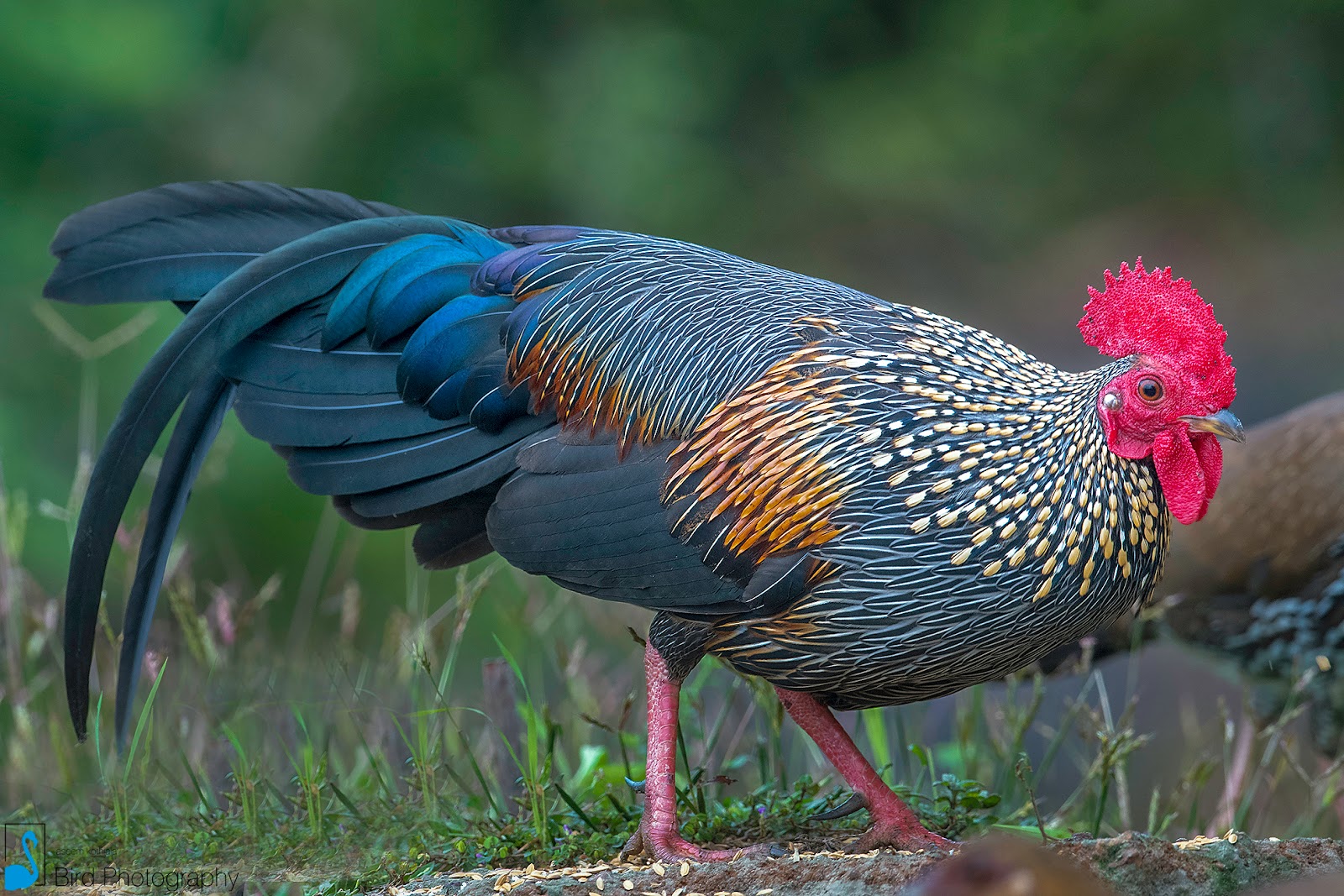
The following day after the Malabar Grey Hornbill ritual, Eldhose took us just to the outskirts of his Lodge where the Grey junglefowl (Gallus sonneratii) and the red spurfowl (Galloperdix spadicea) come to feed in the wee hours. 
Grey junglefowl (Gallus sonneratii)
Red spurfowl (Galloperdix spadicea) 
Red spurfowl (Galloperdix spadicea)
The Philippine Shrike (Lanius cristatus lucionensis) was also seen.
Philippine Shrike (Lanius cristatus lucionensis)
We visited the primary forest again, this time to look for the Black Baza, which was seen roosting on high perch or in flight. Heart-spotted woodpecker and White-bellied Woodpecker was also seen. A pair of Malabar trogon and a female of the Srilankan frogmouth was also seen.

After lunch we decided to visit another hide, where the White-bellied Treepie makes its appearance and after waiting for the entire afternoon, did not even hear it. However, the next day afternoon, decided to go again and while Eldhose drove in his vehicle shared about the opportunity, he got in 1999 to assist in the production of the landmark BBC series, "The Life of Birds". He described how he identified the habitat and three nests of the elusive Rufous Woodpecker. He felt proud, as he shared that due to his knowledge and effort, Sir David Attenborough gifted him a pair of binoculars and a copy prior to the release of the episode.

The moment we were nearing the hide, heard the call, the White-bellied Treepie (Dendrocitta leucogastra) had already perched, it was its first appearance after the hide had re-opened post monsoon.
White-bellied Treepie (Dendrocitta leucogastra)
Post the evening session we ventured out to look for the Great Eared Nightjar, but even after walking for more than an hour could not locate one, instead we did sight the Indian Nightjar (Caprimulgus asiaticus) who was roosting along the road at the edge of the lodge.
Indian Nightjar (Caprimulgus asiaticus)
Today we planned to visit Munnar with another naturalist (Ajomon) and trip was planned in such a way, wherein our early hours was in the forests and tea estates around Pethumoda and later a session in a hide.

Flame-throated bulbul (Pycnonotus gularis)
Oriental white-eye (Zosterops palpebrosus) 
Golden-fronted leafbird (Chloropsis aurifrons)
Rusty-tailed flycatcher (Ficedula ruficauda)

Many might wonder the reasons why we opted for hide photography this time 

# Primarily to walk away with decent images.
# Had very limited time available. (Three days 26th Nov 2018 ~ 29 Nov 2018)
# Could get very close to the elusive bird species.

Observed that one can easily get decent images by a lens with a focal lenght of either a 300 or 400 mm. Though the 500mm mounted on a Dx framed gave very tight frames in these hides.

One can opt either for only hide photography or only forest birding or a combo of both, depending what suits you, in either case you wont be disappointed.

Would like to Thanks Eldhose K V and his family who manage the Eldhose Birding Lodge so well, also Mr. Vinod Sharma, who accompanied me during this trip.


Happy Birding!

You can connect with me 
TwitterFacebookLinkedInInstagramEmail

Do feel free to share

Tuesday, December 4, 2018

Birding in the Nilgiris - Western Ghats

The Nilgiri (literally meaning blue mountain) hills are sub range of Western Ghats mountain chain with about two dozen mountain peaks that are above the height of 2,000 metres. Blue Mountains are the little known places in India and quite famous for the Nilgiri Mountain Railway, along with its amazing flora and fauna. Every twelve years, these Nilgiri hills of southern India turn blue as the flowers (Kurinji or Neelkurinji) that give the range its name are in full bloom, making it a UNESCO natural heritage site.

Our journey this time started from a quiet village 'Kotagiri" which is just a couple of hours from the city of Coimbatore. Kotagiri is one of the oldest hill station in the Nilgiris apart from Ooty and Coonoor and has vast landscapes of tea estates. 

The locals call the region as Sholas. The scenery around was gorgeous and had this undeniable charm. The nearby hills and forest were sensational for birding.

SIMS park was the chosen place to help us photograph the Near-threatened Black and Orange Flycatcher. We were the first ones to enter the park that opened at around 7 am. We walked through the lush garden beds and some native shrubs and mature trees.
Black-and-orange Flycatcher Ficedula nigrorufa   - Male
The Nilgiri Wood Pigeon is found in the canopy of dense hill forests and sholas of Western Ghats. Nilgiri Wood Pigeons are also listed as one of the vulnerable species of birds in India.
Nilgiri Wood Pigeon Columba elphinstonii  
The best place to see the endangered skulker the Nilgiri Sholakili alias Nilgiri Blue robin. These birds are very active during the early hours of the day.
Nilgiri Blue Robin Myiomela major  
We did sight two pairs in the vicinity and while we were enjoying its company, heard some sound and saw the Brown Wood Owl fly out to another far away tree and kept an eye on us. 

Later by early noon, we visited a tea garden, situated on a hill, to look for the endemic and endangered Black-chinned Laughingthrush. Glad, we found the bird, and could skip going to Doddabetta, which is also the highest point of the Nilgiris.
Black-chinned Laughingthrush Trochalopteron cachinnans 
The Kashmir flycatcher a vulnerable species that is endemic to the Indian Subcontinent, it breeds in the north-west Himalayas in the Kashmir region, migrates and also winters in the Western Ghats. The female was being sighted in another location, about 7-8 kms away from where we saw the male.
Kashmir Flycatcher Ficedula subrubra 
The naturalist who took us around was none other than Aggal Sivalingam, whom we have known for more than 3-4 years, through my friends who have known him for more than a decade. Aggal ji after a brief stint in venturing into a family business, had started his career in the wild and has helped many professional and hobby wildlife enthusiast see and photograph the lovely winged avian endangered species in the Nilgiri forests. He indeed has a keen sight and interest, to show the birds that are otherwise difficult to sight in his carrier, which spans to almost two decades.

The forests around the region is also good to see the endemic Nilgiri Flowerpecker, apart from other commoners like the Booted warbler, Scaly-breasted Munia, Red-whiskered Bulbul to name a few.

 Nilgiri Flowerpecker Dicaeum concolor 
There a couple of locations where Aggal ji has built machans (a platform erected in a tree, used for watching birds and animals ), where one can wait and get many endemic and resident birds. However, different species are seen at different times of the year.

Streak-throated Woodpecker, Malabar Parakeet, Nilgiri Flycatcher, Chestnut-headed bee-eater to name a few were sighted apart from White-rumped Munia, Indian Oriole, Bank Myna.
 
Malabar Parakeet Psittacula columboides
Streak-throated Woodpecker Picus xanthopygaeus 
Indeed the increasing human population has led to increased illegal encroachment into Western Ghat forests, cattle grazing and the harvesting of fuel wood, notably for tea factories has led the species to be threatened with extinction.

Another species which is fairly common in the region, but is near-threatened and an endemic resident in the Western Ghats of southern India, the Nilgiri Flycatcher can been seen here.
Nilgiri Verditer Flycatcher Eumyias albicaudatus 
Would like to mention and thank my fellow birder Vinod Sharma, who accompanied and traveled along with me to the region during the fourth week of November 2018 for three days. 

Hoping the species survive and thrive with time to come. Thanking all readers and wishing you all Happy Birding in The Nilgiris...

Happy Birding!

You can connect with me 
TwitterFacebookGoogle PlusLinkedInInstagramEmail

Do feel free to share

Friday, December 8, 2017

Birding in Goa (Western Ghats)

GOA the state in western India is famous and well- known for its beaches and birds. The forests of Goa form the part of Western Ghats.

As most of the Goan forest, we wanted to visit were in Southern region of the state of Goa, planned our stay in Nature's Nest Goa. The resort was tucked along the dense forest, which was just about 5kms from Mollem and adjacent to the Bhagwan Mahavir Wildlife Sanctuary.

The cottage we were allotted was cozy and spacious. It had this old styled red-oxide flooring; mud-lined walls and a bamboo ceiling. A veranda that reminded me of my home-town.

By late evening, we met our host Pankaj Lad, who gave us a very warm welcome. Within minutes we felt very homely. He briefed us on our itinerary starting from the morning of 30th November to 2nd December 2017.

(30th November 2017)

Our day started early and we headed to the smallest of all the wildlife sanctuaries in Goa, Bondla Wildlife Sanctuary.

We sighted the White-rumped Munia, Barn swallow, Crested Treeswift's, Ashy Wood swallow and Malabar Pied Hornbill.

Vigors's Sunbird Aethopyga vigorsii - by Yash Kothiala
Ashy Woodswallow Artamus fuscus - by Aseem Kothiala
Driving deeper inside the sanctuary, we sighted the Oriental Dwarf Kingfisher, Wooly necked stork, White throated Kingfisher to name a few.

Oriental Dwarf Kingfisher Ceyx erithaca - by Aseem Kothiala

We returned to the resort which was about 10kms for Lunch. Delicious Goan meals was served to lure our taste buds. Their cook, Deepak even explained the preparation of each dish to us.

Our second session was a drive towards Tambdi Surla, where we were greeted by a pair of Malabar Trogon.
Malabar Trogon Harpactes fasciatus - by Aseem Kothiala
Later we took a diversion towards a village that had some fruiting trees. Sighted birds like the  Brown-headed barbet, Malabar barbet, Green Bee-eater, Vernal Hanging parrot, Pompadour Green Pigeon, Heart-spotted Woodpecker.

Malabar Barbet Psilopogon malabaricus - by Aseem Kothiala
While, We walked along small trails through the jungles which was continuously buzzing with various bird calls, heard the Oriental Scops Owl calling out loudly. However, we could not locate him. A pair of Greater Flameback's were seen busy foraging.

Once the sunset, we headed back to the resort and soon left for our night trail. After trekking on the platuea for about 15-20 mins could hear the calls of the nightjar. Pankaj was locating the bird even without a torch, though we were having a tough time. By the end of the trail we had sighted the Indian Nightjar and Jerdon's Nightjar.

Jerdon's Nightjar Caprimulgus atripennis - by Aseem Kothiala
Indian jungle Nightjar Caprimulgus indicus - by Aseem Kothiala

(1st December 2017)

Early morning we waiting within the resort for sometime to do some bird-watching. The area near the entrance was buzzing with Vernal Hanging Parrot's, Sunbird's.

Indian Yellow Tit Parus aplonotus - by Yash Kothiala

The day was very windy, we learnt later it was the effect of Oki cyclone. Most of the birds may have flowen to safer perches and were not seen. The rich habitat and plenty of crisscrossed water streams along the trek path behind the Tambdi surla temple led to beautiful forests. However, there was too much breeze and no birds. Twigs were falling off the trees, to be safer, we headed back on the road and took the trail.

As we were returning, calls of a  large mixed hunting party that comprised of Velvet-fronted Nuthatch, Yellow-browed Bulbul and few others were heard and seen. The Black-headed Oriole was seen often.

Thick-billed Flowerpecker Dicaeum agile - by Aseem Kothiala
While, we walking into the trails again, sighted the Dark-fronted Babbler, Puff-throated babbler and a pair of Srilankan Frogmouth. The male indeed looked like a dried leaf.
Sri Lankan Frogmouth Batrachostomus moniliger - by Yash Kothiala
Today we could see a pair of Indian Grey Hornbill they had perched too high on the fruiting tree.

The state bird of Goa, Flame-throated Bulbul, was commonly spotted at the Nature's Nest property along with the Yellow-browed Bulbul.
Flame-throated Bulbul Pycnonotus gularis - by Aseem Kothiala
Yellow-browed Bulbul Acritillas indica  - by Aseem Kothiala
Post lunch on our afternoon session we visited the Bhagwan Mahavir Wildlife Sanctuary, which holds the title of being the largest wildlife preserve within the state of Goa.

After going through the formalities at the check post, we were happy to sight the Forest Wagtail, who soon disappeared into the thickets. The area was noisy thanks to the Racket-tailed Drongo. We could hear the drumming and the calls of the White-bellied Woodpecker.


After driving through the forest for about 6-7 kms, decided to drive back. Due to the weather being windy and gloomy, it had turned dark soon.

(2nd December 2017)

Carambolim Lake, one of the most famous lake and an important bird area in Goa. This manmade lake at one time played host to a number of species of birds, both resident and migratory. In fact we saw only the most common birds in this area, Cattle Egret, Pond Heron, Purple Moorhen, Red-rumped Swallow, Little Egret, Bronze-winged Jacana and Cormorants.

However, our area of interest was the fields opposite to the lake, as a lone Asian Dowitcher was been seen for almost a week plus. Pankaj kept scanning the area but in vain. We realized we had missed it.

There was a mixed flock of Black-tailed Godwits, Glossy Ibis, Gull-billed terns, Streak-throated Swallow and Wire-tailed Swallow. Marsh Harrier (female) was seeing flushing the common waders and Godwits. We did sight the lesser-adjutant stork, Brahminy Kite and Osprey in flight over these fields.

Osprey Pandion haliaetus  - by Aseem Kothiala
By noon, Pankaj drove us to Kitchen 304, a small and intimate restaurant set amid the coconut trees and lush paddy fields. Here we had some really authentic goan dishes. The chef ensured we had a good time and had dished out an outstanding vegetarian stroganoff.

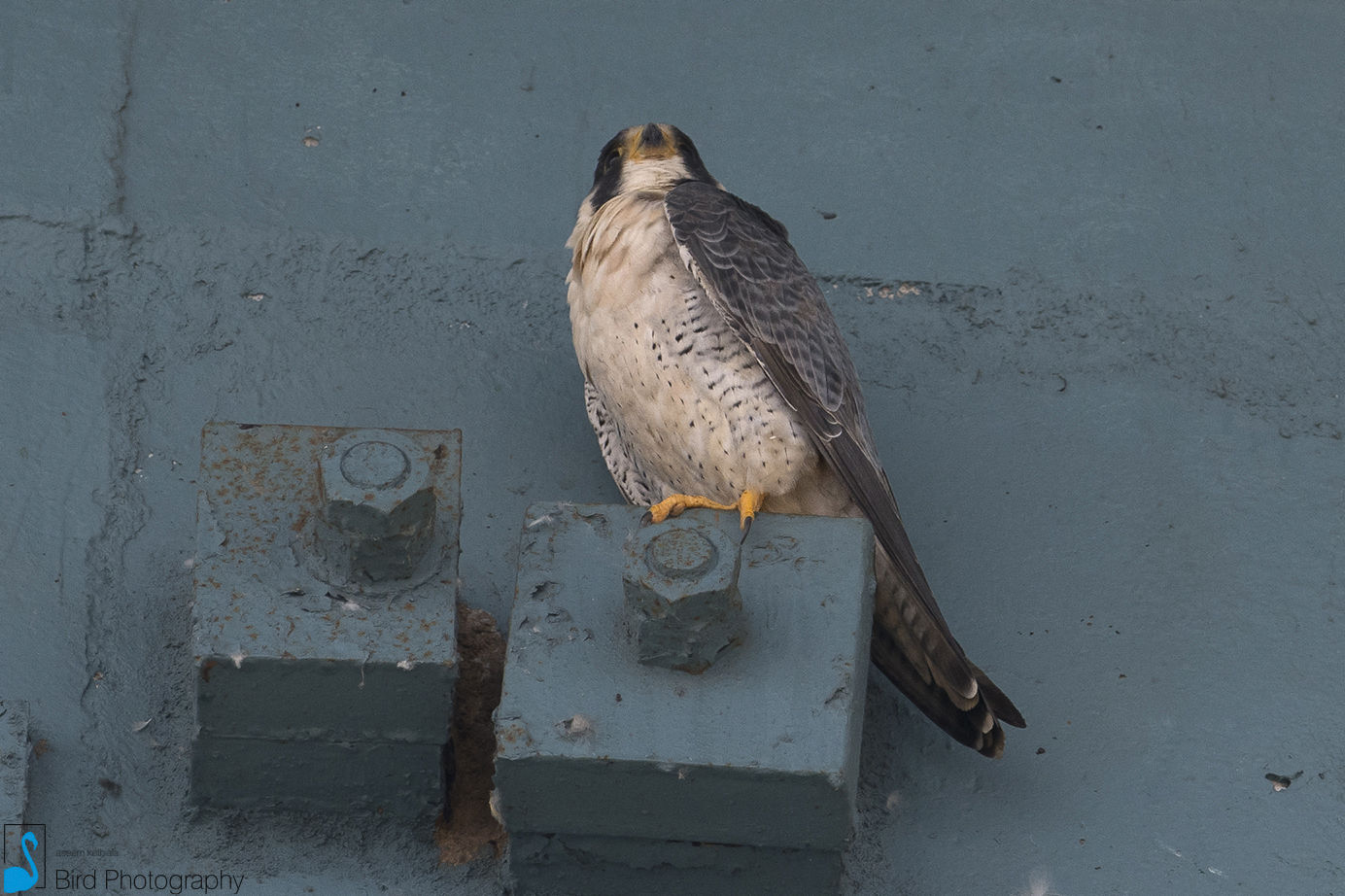
The afternoon session was the famous boat ride over Zuari river. Typically, the Peregrine falcon was spotted under the bridge.
Peregrine Falcon Falco peregrinus - by Aseem Kothiala
The boatman Frankie was indeed an experienced birder and also had a good sense of the requirements of a photographer. He would just get close enough and ensured the bird was not scared away.
Common Kingfisher Alcedo atthis - by Aseem Kothiala
A juvenile White-bellied Sea Eagle was roosting on the tree in the mangroves.
White-bellied Sea Eagle Haliaeetus leucogaster - by Yash Kothiala
White-bellied Sea Eagle Haliaeetus leucogaster - by Aseem Kothiala
Being low tide, the birds had perched along the shore line. We waited for sometime and watched them preen and enjoy the breeze. They were in no mood to soar.
 Osprey Pandion haliaetus  - by Aseem Kothiala
Brahminy Kite Haliastur indus - by Aseem Kothiala


Striated Heron Butorides striata  - by Aseem Kothiala
Common Kingfisher Alcedo atthis - by Aseem Kothiala
 Black-capped Kingfisher Halcyon pileata - by Yash Kothiala
Collared Kingfisher Todiramphus chloris - by Aseem Kothiala

Stork-billed Kingfisher Pelargopsis capensis - by Aseem Kothiala
White-throated Kingfisher Halcyon smyrnensis - by Aseem Kothiala


The best time to visit the place for bird-watching is from October to mid March. January would be awesome for bird photography.


We signed off with a count of about 140 birds, off which four were lifers to us. Thanking Yash Kothiala for accompanying and contributing his images, Pankaj Lad for his expertise and Seema Kothiala for her company.


Happy Birding!

You can connect with me 
TwitterFacebookGoogle PlusLinkedInInstagramEmail


Sr. No Description Status Location
ANSERIFORMES: Anatidae
1 Lesser Whistling Duck Dendrocygna javanica Carambolim Lake
2 Ruddy Shelduck Tadorna ferruginea Carambolim Lake
GALLIFORMES: Phasianidae
3 Indian Peafowl Pavo cristatus Nature's Nest
4 Grey Junglefowl Gallus sonneratii Endemic  Mahavir W.L.S
5 Red Spurfowl Galloperdix spadicea Endemic  Bondla W.L.S
COLUMBIFORMES: Columbidae
6 Rock Dove Columba livia Commonly seen
7 Spotted-necked Dove Streptopelia chinensis Commonly seen
8 Pompadour Green Pigeon Treron pompadora Bondla W.L.S
9 Emerald Dove Chalcophaps indica Nature's Nest
CAPRIMULGIFORMES: Podargidae
10 Sri Lankan Frogmouth Batrachostomus moniliger Mahavir W.L.S
CAPRIMULGIFORMES: Caprimulgidae
11 Jerdon's Nightjar Caprimulgus atripennis Mahavir W.L.S
12 Indian jungle Nightjar Caprimulgus indicus Mahavir W.L.S
CAPRIMULGIFORMES: Apodidae
13 Crested Treeswift Hemiprocne coronata Bondla W.L.S
CUCULIFORMES: Cuculidae
14 Drongo Cuckoo Surniculus lugubris Mahavir W.L.S
15 Common Hawk Cuckoo Hierococcyx varius Mahavir W.L.S
GRUIFORMES: Rallidae
16 White-breasted Waterhen Amaurornis phoenicurus Zuari
17 Purple Swamphen Porphyrio porphyrio Carambolim Lake
18 Common Moorhen Gallinula chloropus Carambolim Lake
19 Common Coot Fulica atra Carambolim Lake
PELECANIFORMES: Ciconiidae
20 Lesser Adjutant Leptoptilos javanicus Vulnerable Carambolim Lake / Zuari
21 Asian Openbill Anastomus oscitans Carambolim Lake 
22 Woolly-necked Stork Ciconia episcopus Bondla W.L.S
PELECANIFORMES: Ardeidae
23 Black-crowned Night Heron Nycticorax nycticorax Zuari
24 Striated Heron Butorides striata Zuari
25 Indian Pond Heron Ardeola grayii Commonly Seen
26 Cattle Egret Bubulcus ibis Commonly Seen
27 Grey Heron Ardea cinerea Carambolim Lake
28 Purple Heron Ardea purpurea Carambolim Lake
29 Little Egret Egretta garzetta Carambolim Lake
30 Western Reef Egret Egretta gularis Zuari
PELECANIFORMES: Threskiornithidae
31 Black-headed Ibis Threskiornis melanocephalus Near-threatened Carambolim Lake
32 Glossy Ibis Plegadis falcinellus Carambolim Lake
PELECANIFORMES: Phalacrocoracidae
33 Indian Cormorant Phalacrocorax fuscicollis Carambolim Lake
34 Little cormorant Microcarbo niger Carambolim Lake
PELECANIFORMES: Anhingidae
35 Oriental Darter Anhinga melanogaster Near-threatened Zuari
CHARADRIIFORMES: Recurvirostridae
36 Black-winged Stilt Himantopus himantopus Carambolim Lake
CHARADRIIFORMES: Jacanidae
37 Bronze-winged Jacana Metopidius indicus Carambolim Lake
CHARADRIIFORMES: Scolopacidae
38 Eurasian Curlew Numenius arquata Near-threatened Zuari
39 Black-tailed Godwit Limosa limosa Near-threatened Carambolim Lake
40 Bar-tailed Godwit Limosa lapponica Carambolim Lake
41 Terek Sandpiper Xenus cinereus Zuari
42 Common Sandpiper Actitis hypoleucos Zuari
43 Spotted Redshank Tringa erythropus Zuari
44 Common Greenshank Tringa nebularia Zuari
45 Common Redshank Tringa totanus Zuari
CHARADRIIFORMES: Laridae
46 Gull-billed Tern Gelochelidon nilotica Carambolim Lake / Zuari
ACCIPITRIFORMES: Pandionidae
47 Osprey Pandion haliaetus Zuari
ACCIPITRIFORMES: Accipitridae
48 Crested Serpent Eagle Spilornis cheela Bondla W.L.S
49 Black Eagle Ictinaetus malaiensis Bondla W.L.S
50 Western Marsh Harrier Circus aeruginosus Carambolim Lake
51 Shikra Accipiter badius Bondla W.L.S
52 White-bellied Sea Eagle Haliaeetus leucogaster Zuari
53 Brahminy Kite Haliastur indus Carambolim Lake / Zuari
54 Black Kite Milvus migrans Commonly Seen
STRIGIFORMES: Strigidae
55 Jungle Owlet Glaucidium radiatum Bondla W.L.S
TROGONIFORMES: Trogonidae
56 Malabar Trogon Harpactes fasciatus Mahavir W.L.S
BUCEROTIFORMES: Bucerotidae
57 Malabar Pied Hornbill Anthracoceros coronatus Near-threatened Mahavir W.L.S
58 Malabar Grey Hornbill Ocyceros griseus Endemic  Mahavir W.L.S
PICIFORMES: Picidae
59 Brown-capped Pygmy woodpecker Dendrocopos nanus   Bondla W.L.S
60 Heart-spotted Woodpecker Hemicircus canente Mahavir W.L.S
61 Black-rumped Woodpecker Dinopium benghalense Bondla W.L.S
62 Rufous Woodpecker Micropternus brachyurus Mahavir W.L.S
63 Greater Flame-backed Woodpecker Chrysocolaptes lucidus Mahavir W.L.S
PICIFORMES: Ramphastidae
64 Brown-headed Barbet Psilopogon zeylanicus Mahavir W.L.S
65 Malabar Barbet Psilopogon malabaricus Endemic  Mahavir W.L.S
CORACIIFORMES: Meropidae
66 Green Bee-eater Merops orientalis Mahavir W.L.S
67 Chestnut-headed bee eater Merops leschenaulti Mahavir W.L.S
68 Blue-tailed Bee-eater Merops philippinus Carambolim Lake
CORACIIFORMES: Alcedinidae
69 Oriental Dwarf Kingfisher Ceyx erithaca Bondla W.L.S
70 Common Kingfisher Alcedo atthis Zuari
71 Pied Kingfisher Ceryle rudis Carambolim Lake
72 Stork-billed Kingfisher Pelargopsis capensis Zuari
73 White-throated Kingfisher Halcyon smyrnensis Bondla W.L.S / Zuari
74 Black-capped Kingfisher Halcyon pileata Zuari
75 Collared Kingfisher Todiramphus chloris Zuari
FALCONIFORMES: Falconidae
76 Peregrine Falcon Falco peregrinus Zuari
PSITTACIFORMES: Psittaculidae
77 Vernal Hanging Parrot Loriculus vernalis Mahavir W.L.S
PASSERIFORMES: Campephagidae
78 Scarlet Minivet Pericrocotus flammeus Mahavir W.L.S
PASSERIFORMES: Oriolidae
79 Black-hooded Oriole Oriolus xanthornus Bondla W.L.S
80 Indian Golden Oriole Oriolus kundoo Bondla W.L.S
81 Black-naped Oriole Oriolus chinensis Bondla W.L.S
PASSERIFORMES: Artamidae
82 Ashy Woodswallow Artamus fuscus Bondla W.L.S
PASSERIFORMES: Vangidae
83 Bar-winged Flycatcher-shrike Hemipus picatus Bondla W.L.S
PASSERIFORMES: Aegithinidae
84 Common Iora Aegithina tiphia Bondla W.L.S
PASSERIFORMES: Dicruridae
85 Black Drongo Dicrurus macrocercus Bondla W.L.S
86 Ashy Drongo Dicrurus leucophaeus Bondla W.L.S
87 White-bellied Drongo Dicrurus caerulescens Bondla W.L.S
88 Bronzed Drongo Dicrurus aeneus Mahavir W.L.S
89 Hair-crested Drongo Dicrurus hottentottus Bondla W.L.S
90 Greater Racket-tailed Drongo Dicrurus paradiseus Mahavir W.L.S
PASSERIFORMES: Dicaeidae
91 Thick-billed Flowerpecker Dicaeum agile Mahavir W.L.S
92 Plain Flowerpecker Dicaeum concolor Mahavir W.L.S
PASSERIFORMES: Nectariniidae
93 Little Spiderhunter Arachnothera longirostra Mahavir W.L.S
94 Purple-rumped Sunbird Leptocoma zeylonica Mahavir W.L.S
95 Crimson-backed Sunbird Leptocoma minima Endemic  Nature's Nest
96 Purple Sunbird Cinnyris asiaticus Nature's Nest
97 Loten's Sunbird Cinnyris lotenius Nature's Nest
98 Vigors's Sunbird Aethopyga vigorsii Endemic  Nature's Nest
PASSERIFORMES: Irenidae
99 Asian Fairy-bluebird Irena puella Mahavir W.L.S
100 Golden-fronted Leafbird Chloropsis aurifrons Nature's Nest
PASSERIFORMES: Estrildidae
101 White-rumped Munia Lonchura striata Bondla W.L.S
PASSERIFORMES: Motacillidae
102 Forest Wagtail Dendronanthus indicus Mahavir W.L.S
103 Yellow Wagtail Motacilla flava Carambolim Lake
PASSERIFORMES: Paridae
104 Indian Yellow Tit Parus aplonotus Nature's Nest
PASSERIFORMES: Cisticolidae
105 Common Tailorbird Orthotomus sutorius Bondla W.L.S
PASSERIFORMES: Acrocephalidae
106 Clamorous Reed Warbler Acrocephalus stentoreus Carambolim Lake
PASSERIFORMES: Hirundinidae
107 Streak-throated Swallow Petrochelidon fluvicola Carambolim Lake
108 Red-rumped Swallow Cecropis daurica Bondla W.L.S
109 Wire-tailed Swallow Hirundo smithii Carambolim Lake
110 Barn Swallow Hirundo rustica Bondla W.L.S
PASSERIFORMES: Pycnonotidae
111 Flame-throated Bulbul Pycnonotus gularis Nature's Nest
112 Red-whiskered Bulbul Pycnonotus jocosus Nature's Nest
113 Red-vented Bulbul Pycnonotus cafer Nature's Nest
114 White-browed Bulbul Pycnonotus luteolus Mahavir W.L.S
115 Yellow-browed Bulbul Acritillas indica Nature's Nest
PASSERIFORMES: Timaliidae
116 Dark-fronted Babbler Rhopocichla atriceps Mahavir W.L.S
PASSERIFORMES: Pellorneidae
117 Puff-throated Babbler Pellorneum ruficeps Mahavir W.L.S
PASSERIFORMES: Leiothrichidae
118 Jungle Babbler Turdoides striata Mahavir W.L.S
PASSERIFORMES: Sittidae
119 Velvet-fronted Nuthatch Sitta frontalis Mahavir W.L.S
PASSERIFORMES: Muscicapidae
120 Indian Robin Saxicoloides fulicatus Mahavir W.L.S
121 White-rumped Shama Kittacincla malabarica Nature's Nest
122 Malabar Whistling Thrush Myophonus horsfieldii Endemic  Nature's Nest
123 Eastern Stonechat Saxicola maurus Carambolim Lake
PASSERIFORMES: Turdidae
124 Orange-headed Thrush Geokichla citrina Nature's Nest

Do feel free to share

 
Fatbirder's Top 1000 Birding Websites