We were now totally acclimatized to the climate, we could walk and breathe normally. As every day the mornings would start with a couple of Ginger lemon tea, freshly made with honey as a sweetener and gazing into the open skies and mountains around us.
 |
| View from the room - LEH |
Our backpacks were out and camping material had arrived.
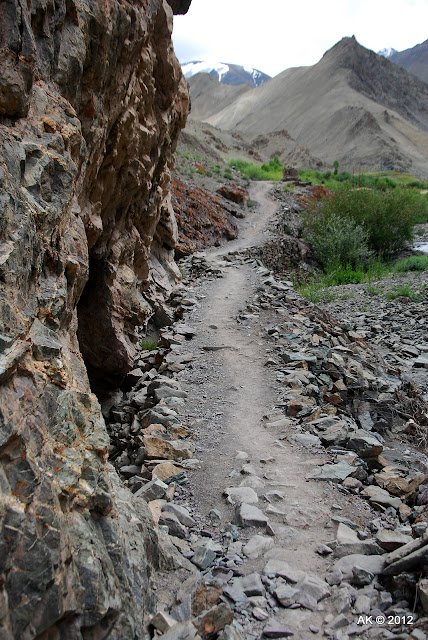
We drove to the outskirts of Rumbak valley (2 hour drive) to the base camp Zingchen. Here we had our mountain horses ready for us. A couple of horses were there to ferry our luggage and one for each one of us.
 |
| Getting ready to mount the Mountain Horses - The Big Five ! |
Nothing made me feel lesser than a cowboy today, as had a cowboy hat on my
head, one camera rested on the bean bag placed on the saddle and the other one
around my hand. It was fun, when the horse would climb up gorges and
cross streams.

In about 4-5 hours we were at the Rumbak Valley. A lovely village, with
just nine families, the villagers of Rumbak take turn to host their
guests.
 |
| Rumbak Village |
Rumbak, which locally means “into the mountains”, located in a
valley, with stunning peaks around, all the houses are clustered on a
side of the mountain which included a monastery and a community hall.
There were lush green fields that surrounded the village. Something that
was unique was the dry composting toilets.
The
villagers work hard during these four months, to keep supplies that
would last them through the harsh winters. The modest room that was
offered to us had mattresses and blankets. The solar energy is used to
charge and store power, which in return is supplied to them in the
evening hours. There is no mobile network, no television signals. The
host offered us their staple food of momos and thukpa (
tibetan noodle soup)
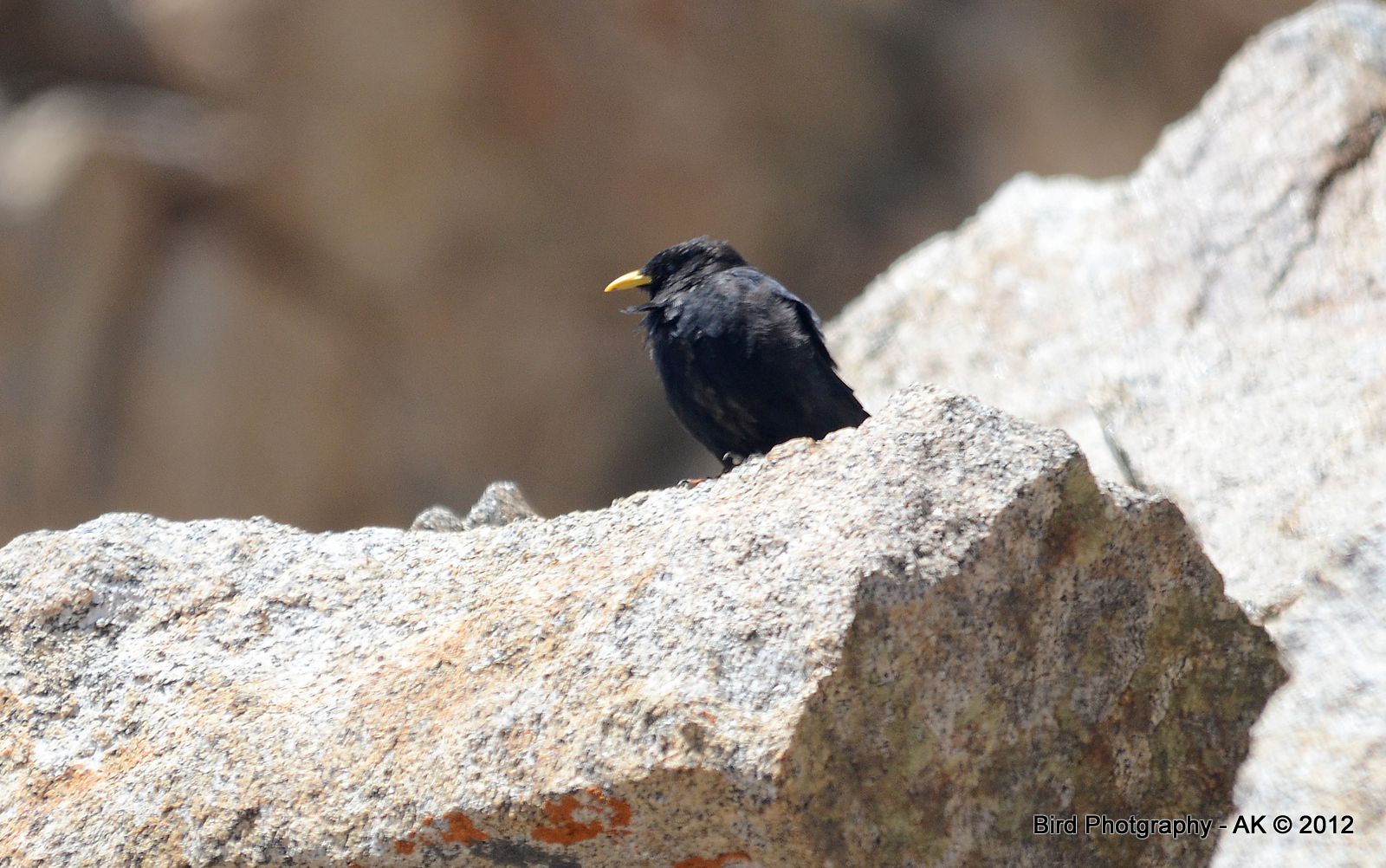
A full two day birding in Rumbak Valley sighted the Himalayan griffon,
Lammergeier,
Chukar, Fire-fronted serin, Sulphur-bellied warbler, Brown and Robin accentor's, Tickell’s leaf warbler, Streaked
rosefinch, Pigeons, Magpies, Common & Fork-tailed swift, Red-billed
chough, Twite to name a few. We also sighted the blue sheep.
 |
| Chukar (Alectoris chukar) |
.JPG) |
| Black-billed Magpie (Pica hudsonia) |
 |
| Himalayan Griffon Vulture (Gyps himalayensis) |
 |
| White Wagtail · Motacilla alba |
 |
| Robin Accentor (Prunella rubeculoides) |
 |
| Twite (Carduelis flavirostris) |
 |
| Citrine Wagtail (Motacilla citreola) |
 |
| Fire-fronted Serin (Serinus pusillus) |
 |
| Hill Pigeon (Columba rupestris) |
 |
| Brown Accentor (Prunella fulvescens) |
Returned to Leh after a two day stay and headed towards pangong lake early morning.
(Remember to get your permits (permits are given at DC office in Leh
city, it's a must to have permits if you're heading towards Pangong
Tso). Thanks to Ramesh ji, we had no hassles in getting the same)
We drove through Karu, which is about 45km from Leh city,
here we had to take left for Pangong lake. Till Karu, a few monasteries
can be sighted on either sides of the road. The road goes parallel along the river
Indus.
As we were ascending higher and higher, the
temperature fell drastically and As we approached closer to Chang La
pass, the roads had sharper curves. Chang La, is considered to be the
second highest motorable pass in the world at 5360m, the weather was
mind-numbingly cold.
 |
| Foothills of Chang La Valley |
|
Soon
we reached Pangong Tso lake, which was is a 130km long pristine blue
lagoon at an altitude of 4250m, is shared between India and China, about
40km of it lies in India and the rest in China. The lake had a
mesmerizing effect. The most magical moment is when the colours change
from being green to blue to purple to shades of gold, all these vary on
the angle of sun rays.
 |
| Pangong Tso |
 |
| Pangong Tso |
 |
| Pangong Tso |
The
cold winds from the lake made us shiver and dried our lips,
yet it was a pleasure to promenade on the banks, watching the waves of
crystal clear water, Brown-headed Gulls, Common Merganser, Grebes. There
is absolutely no fauna, probably due to the brutally cold temperatures.
Overnight we stayed in a self contained tent.
 |
| Common Merganser |
 |
| Brown-headed Gull |
As we started the drive back to Leh, passed through lush green meadows, the Himalayan Marmots were seen basking and gathering reserves for winters that would arrive with the next two months.
By now, even our driver had turned into a bird watcher too and would drive slow and stop, the moment he sighted a bird along the terrain.
 |
| Himalayan marmot |
 |
| Himalayan marmot |
 |
| White-winged Redstart (Phoenicurus erythrogastrus) |
 |
| Horned Lark (Eremophila alpestris) |
The next day headed towards Khardung La. Known as the highest
motorable pass in the world Khardung La is the gateway to the Nubra
valley, one of the most picturesque locations in Leh.
The
drive to Khardung La was very bumpy, as the weather and landslides that
frequently happen here doesn't allow the road to remain well maintained!
Having said that the drive to the summit of Khardung La is relatively
easy compared to a few other rides in Leh.
 |
| Black Redstart- female |
 |
| Yellow-billed Chough (Pyrrhocorax graculus) |
 |
| Brandt's Mountain Finch or Black-Headed Mountain-Finch (Leucosticte brandti) |
 |
| Red-billed Chough (Pyrrhocorax pyrrhocorax) |
Finally, the trip came to an end and had loads of memories, a few memory cards full of images, a promise and desire in the heart to return to this mystical location again!


Previous Page: